If you are looking for precision metal parts that fit your exact specifications, custom-cut metal sheets are the solution. From prototype to full-scale production, custom cutting transforms flat metal sheets into components for automation equipment, energy storage, construction, electronics, and countless other industries.
This guide covers everything you need to know: what custom cut metal plates are, available cutting techniques, material selection, design tips, and how to choose the right manufacturing partner.
What Is Custom Cut Sheet Metal?
Custom cut sheet metal refers to flat metal sheets that are cut to specific shapes, sizes, and tolerances based on customer requirements. The process starts with a digital design—typically created in CAD software—which serves as the blueprint for precision cutting machines.
Sheet thickness generally ranges from 0.8mm-30mm(0.0315in-1.18in) with thinner sheets offering more versatility and thicker plates handling heavier loads.(Less than 0.8mm of plates does not recommend laser cutting, and the heat generated by laser processing will make the plates easily deformed) Whether you need a simple rectangular piece or a complex component with intricate cutouts, custom cutting delivers exactly what your project demands.
Key Custom Cutting Techniques
Several methods are available for cutting sheet metal to custom specifications. Each has distinct advantages depending on material, thickness, complexity, and production volume.
1. Laser Cutting
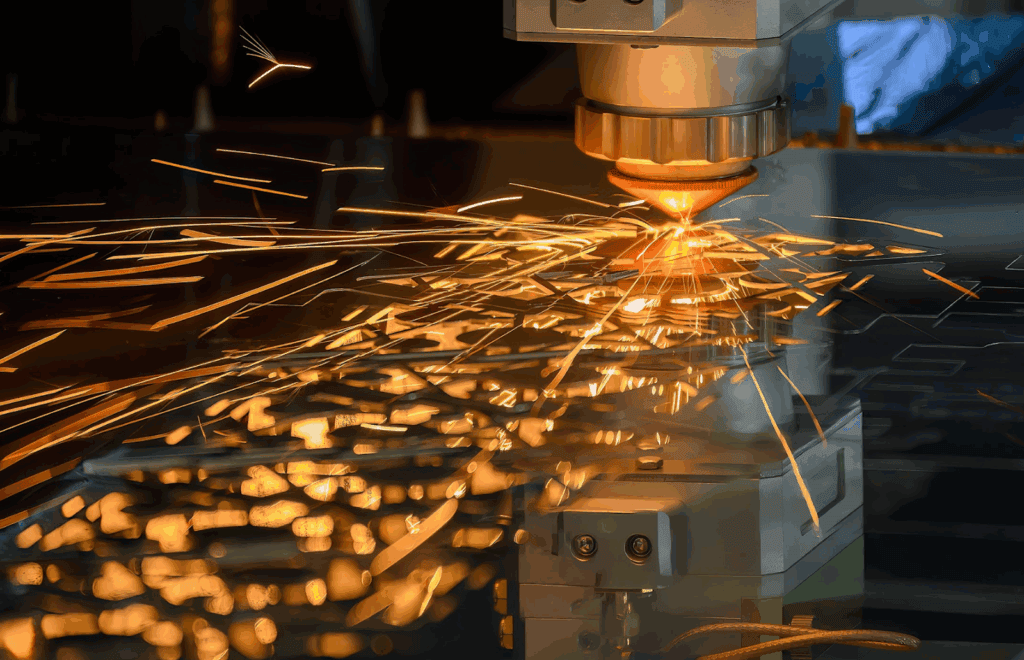
Laser cutting uses a high-powered, computer-controlled laser beam to melt, burn, or vaporize metal along the designated cut path. It is widely considered the most precise cutting method available.
Advantages:
- Exceptional precision – achieves tight tolerances with minimal deviation
- Clean edges – produces smooth, burr-free cuts requiring little post-processing
- Complex shapes – capable of intricate designs and fine details
- Material efficiency – reduces waste with a fine beam and optimized nesting
- No tooling changes – shortens lead times for custom orders
Best for: Stainless steel, mild steel, aluminum, and various alloys. Ideal for both prototypes and high-volume production.
2. Waterjet Cutting
Waterjet cutting uses a high-pressure jet of water mixed with an abrasive material (like garnet) to cut through metal. Because it’s a cold-cutting process, there’s no heat-affected zone (HAZ)—meaning the metal’s properties remain unchanged.
Advantages:
Best for: Heat-sensitive materials, thick plates, and applications where material integrity is critical.
3. CNC Punching / Presswork
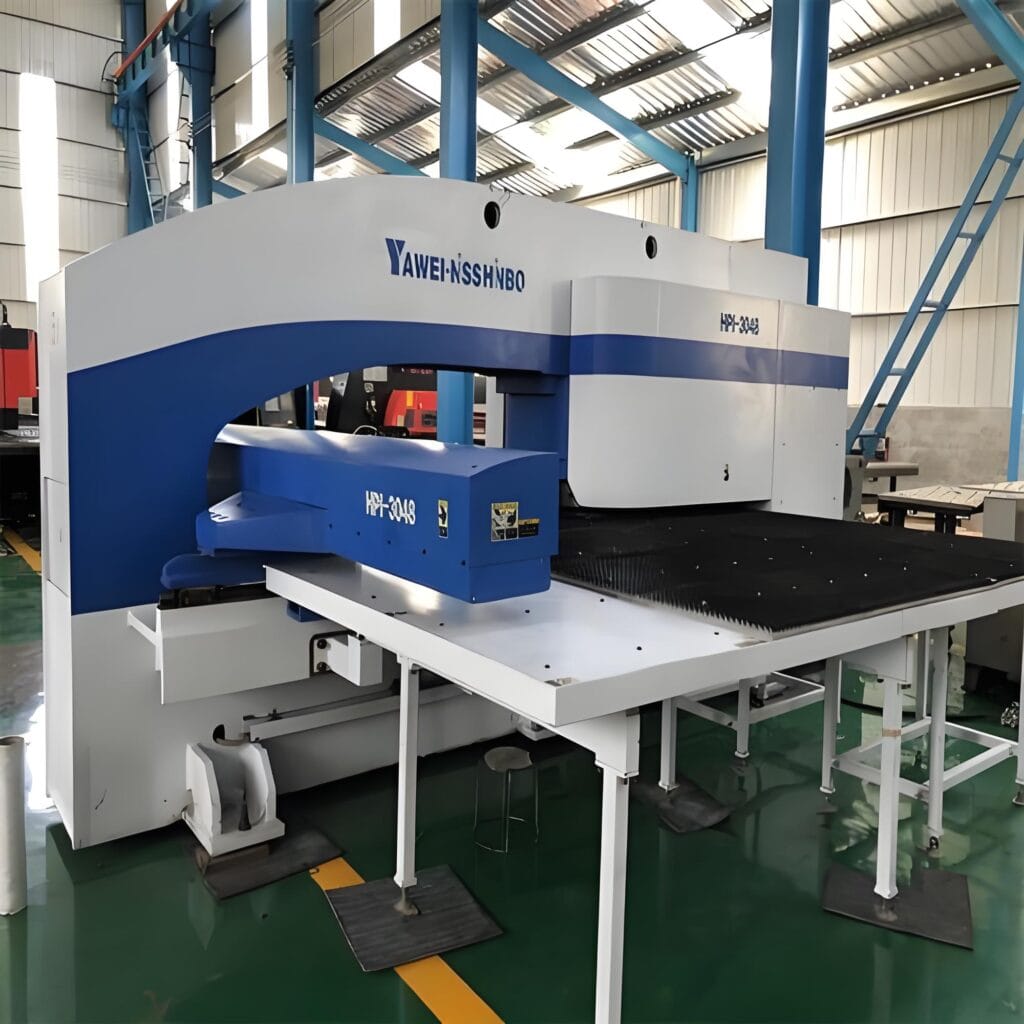
CNC punching uses a punch and die to create holes or shapes in sheet metal through mechanical force. It’s fast and cost-effective for high-volume production of uniform parts.
Advantages:
- High speed – ideal for mass production
- Cost-effective for simple, repetitive shapes
- Can combine cutting with forming operations
Best for: Large production runs of parts like brackets, washers, and frames.
4. Shearing
Shearing is a mechanical process where two blades cut straight lines through a metal sheet. It’s one of the fastest and most economical cutting methods(It is suitable for products with low precision requirements).
Advantages:
- Fast and efficient for straight cuts
- Low equipment investment
- Minimal tool wear
Best for: Cutting large sheets into smaller sections, often used in construction and HVAC industries.
Common Materials for Custom Cut Sheet Metal
The material you choose affects performance, cost, and fabrication method. Here are the most commonly used metals:
Design Tips for Custom Sheet Metal Parts
Following Design for Manufacturability (DFM) guidelines helps ensure your parts are easy to produce, reducing both cost and lead time.
Key Design Considerations:
Pro tip: Always discuss your design with the fabricator before finalizing—they can flag potential issues early and suggest optimizations.
Additional Fabrication Processes
Custom cutting is often just the first step. Many parts require additional processes to reach their final form:
Click to learn more:The Complete Guide to Sheet Metal Fabrication
- Bending / Forming – Shapes flat parts into 3D structures using press brakes
- Welding – Joins multiple components together (MIG, TIG, or spot welding)
- Deburring / Grinding – Removes sharp edges and smooths surfaces
- Surface Finishing – Adds protection and aesthetic appeal: powder coating, anodizing, plating, or painting
- Hardware Insertion – Installs threaded fasteners for easy assembly
How to Choose a Custom Cut Sheet Metal Partner
Selecting the right fabricator is critical to your project’s success. Here’s what to look for:
Click to learn more:how to find a reliable sheet metal supplier
Applications Across Industries
Custom cut sheet metal is essential in virtually every sector:
- Automotive – Body panels, brackets, structural components
- Aerospace – Lightweight structural parts, engine components
- Construction – Beams, frames, cladding
- Electronics – Enclosures, heat sinks
- Medical – Surgical instruments, equipment housings
- Food Processing – Stainless steel surfaces, hygienic equipment
- industry-Automated equipment,electrical cabinet
Summary
Custom cut sheet metal offers unparalleled flexibility for creating precision metal parts tailored to your needs. By understanding the cutting methods, materials, design considerations, and fabrication capabilities available, you can make informed decisions that save time, reduce costs, and ensure high-quality results.
Whether you need a single prototype or high-volume production, the right partner will guide you through every step—from design review to final delivery.
Contact Us
Click here: Contact Us
Email: [email protected]
Author:David Wu
URL: https://zhmfr.com
Video URL:Youtude
China Kewei Intelligent Technology Co., Ltd
Address:No. 23, Yexing Road, Xiangxi Industrial Zone, Liaobu Town, Dongguan City, Guangdong Province, China
With our profound expertise in customized sheet metal manufacturing services, CNC milling and turning, and metal stamping processing, we meet the complex needs of the automation equipment industry, new energy storage industry, and manufacturing industry. Our service portfolio includes automation equipment enclosures, precision mechanical parts, energy storage cabinet enclosures, and other customized metal products. We use advanced laser cutting, welding, and forming technologies to produce parts with strict tolerances and excellent surface finish. Whether you need small batch prototypes for research and development or large-scale production for assembly lines, our scalable solutions ensure the quality, cost-effectiveness, and on-time delivery of your industrial projects
相关文章:
 The Complete Guide to Sheet Metal Fabrication: Processes, Materials, and Best Practices
 Custom Sheet Metal Solutions: What Kewei Can Do for Your Business
 Differences Between Sheet Metal Parts and Machined Parts: How to Tell Them Apart
 Tooling and Fixture Costs in Sheet Metal Fabrication: A Transparent Guide for Overseas Buyers