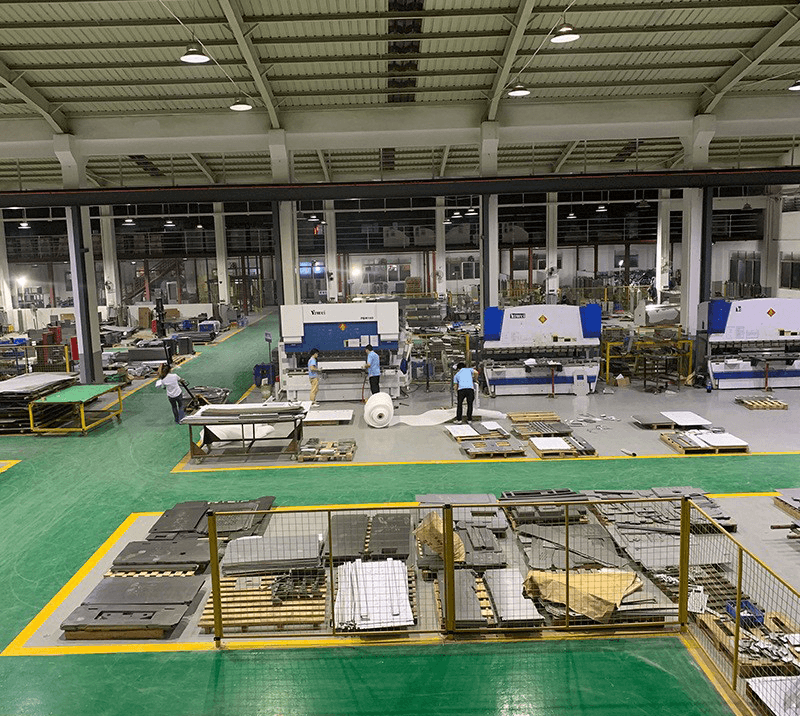
As a purchasing professional, engineering manager, or business owner, when you outsource sheet metal parts to a contract manufacturer, three things keep you up at night: quality that doesn’t meet specs, deliveries that are late, and hidden costs lurking in the price.
Unlike standard off‑the‑shelf components, sheet metal fabrication has many “invisible traps” – flat‑pattern layout errors, uncontrolled springback, welding distortion, poor surface coating adhesion… Any single misstep along the way can leave you with parts that are technically usable but far from ideal.
This guide does not come from the factory’s perspective – it is written entirely from yours. We give you 10 practical questions to build a complete system for screening, evaluating, and qualifying sheet metal outsourcing suppliers. Whether this is your first time outsourcing or you are looking to switch suppliers, this article will help you avoid some costly mistakes.
1. Screening Stage: Reading Between the Lines of a Quotation
Question 1: Does the quotation clearly separate “material cost” from “processing cost”?
A reliable supplier will always itemise the quotation clearly, breaking down:
- Material cost (grade, specification, thickness, purchase price)
- Nesting/cutting cost (laser, turret punch, shearing)
- Bending cost (per bend, per hour, or by complexity)
- Welding cost (by weld length or by hour)
- Surface finishing cost (in‑house or subcontracted)
- Packaging and shipping cost
Red flag: If the quotation shows only a single lump‑sum total, you lose the ability to compare prices or negotiate effectively. Worse – they may be marking up materials (e.g., substituting genuine material with lower‑grade stock) or outsourcing surface finishing to unqualified sub‑shops without your knowledge.
Suggested question: “Could you provide a detailed quotation breaking down each process cost?”
Question 2: Is the material sourcing channel traceable?
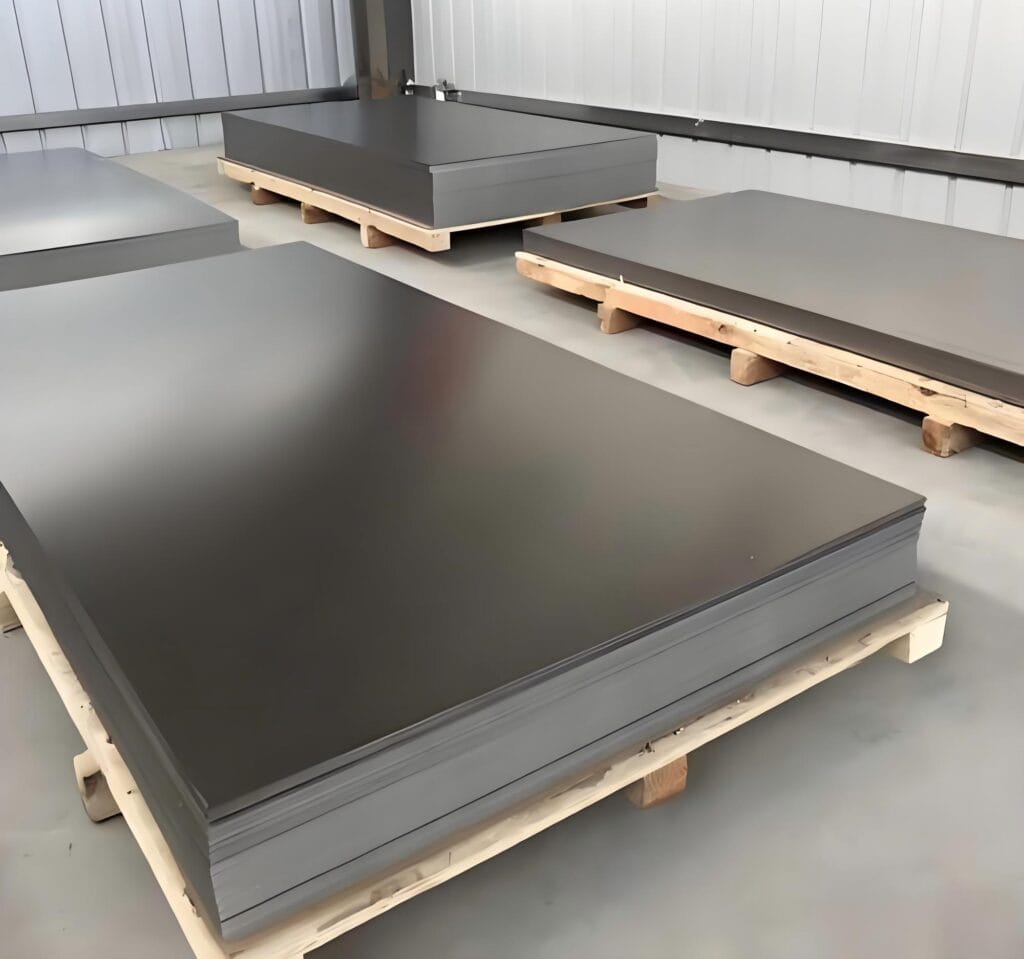
The material is the soul of any sheet metal part. Take Q235 cold‑rolled steel – the chemical composition, thickness tolerance, and surface quality vary dramatically between Baosteel, Angang, and unknown mini‑mills.
A reliable supplier will:
- Provide incoming material test certificates (MTC / Mill Test Certificate)
- Mark batch numbers on materials for full traceability back to purchase orders
- Accept customer‑designated brands or third‑party sampling inspections
Red flag: They say “we use top‑tier materials” but cannot produce any written proof, or they are vague about their material sources.
Suggested question: “Where do you source your materials? Can you provide a mill test certificate with each shipment?”
2. Capability Assessment: Equipment List ≠ Real Capability
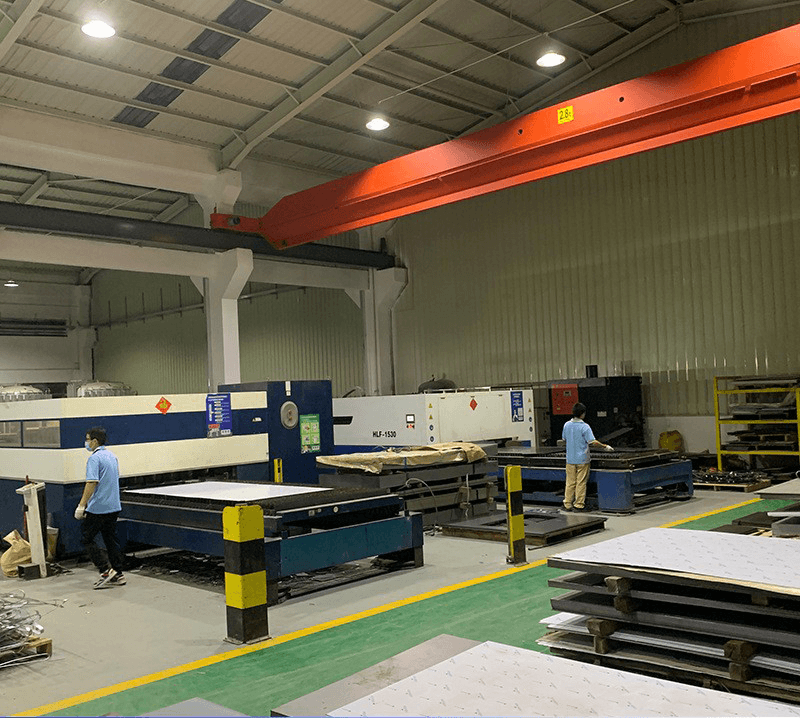
Question 3: How much gap is there between “nominal accuracy” and “actual accuracy” on laser cutting?
Many suppliers’ brochures claim “positioning accuracy ±0.03mm” – but that is no‑load accuracy. In actual cutting, thermal distortion, focus drift, and gas pressure fluctuations typically bring real machining accuracy down to ±0.1 – 0.2mm.
How to verify:
- Ask for recent dimensional inspection reports from actual jobs (not just brochures)
- During a site visit, randomly pick a few cut parts and measure hole spacing and outer contours with callipers
Suggested question: “What is the real‑world, stable accuracy of your laser cutting? Can you share inspection records from a recent batch?”
Question 4: How do you handle springback in the bending process?
Springback is one of the most common quality headaches in sheet metal. An experienced supplier will proactively tell you:
- How they adjust bending compensation for different material batches
- What their first‑article approval process looks like
- Whether they use a crowning (deflection compensation) system on their press brakes
Red flag: They say “our bending is very accurate – we bend exactly to the drawing” – this suggests they may not understand the complexity of springback, or they are unwilling to invest time in first‑piece setup.
Suggested question: “For stainless steel parts with thickness ≥ 2mm, how do you control springback? What is your first‑article approval process?”
3. Quality Control System: Talk Is Cheap – Show Me the System
Question 5: Is First Article Inspection (FAI) mandatory, or “just when needed”?
For you as the buyer, First Article Inspection (FAI) is your first line of quality defence. A professional supplier will, before starting mass production:
- Produce the first article
- Perform full dimensional inspection (including critical dimensions, threads, surface quality)
- Provide an FAI report for your approval
- Start full production only after you sign off
Red flag: They say “we’ll inspect the first article internally – if there’s a problem we’ll fix it” – this means you lose the chance to correct errors before production runs. If problems are discovered only after the entire batch is finished, rework costs and delivery delays will be painful.
Suggested question: “Is customer approval of the first article required before mass production? What inspection items does your FAI report cover?”
Question 6: What is the frequency and method of in‑process inspection?
Even if the first article passes, in‑process factors – tool wear, batch‑to‑batch material variation, machine thermal drift – can cause quality to drift during production.
A reliable supplier’s in‑process controls:
- Operator self‑inspection (every part or every batch)
- Quality inspector patrol checks (every 2 hours or every 50 parts)
- SPC (Statistical Process Control) trend charts for critical dimensions
Red flag: They say “our machines are very stable – we don’t need frequent inspections” – this does not hold up in sheet metal fabrication, because materials, tooling, and ambient temperature are always changing.
Suggested question: “During mass production, how often do you perform inspections and what items do you check?”
4. Delivery & After‑Sales: Easy to Promise, Hard to Deliver
Question 7: Does your delivery commitment include a “buffer”?
Some suppliers quote very tight delivery times just to win the order. What often happens:
- Laser cutting runs late → bending waits idle
- Bending first article gets reworked → welding works overtime
- Surface finishing sub‑contractor is delayed → entire schedule slips
Recommendation: Ask suppliers to explicitly state buffer days in their delivery commitment. For example, a 7‑day promise might mean 5 days of actual production plus 2 days of buffer for contingencies (machine breakdown, material delays, rework).
Suggested question: “Does your delivery commitment include buffer time for unexpected issues? What was your on‑time delivery rate over the last 6 months?”
Question 8: What is your process for handling quality issues after delivery?
Sheet metal parts can get damaged in transit, or you may discover assembly interference when you put them together. This is where the supplier’s responsibility and responsiveness are truly tested.
A reliable supplier will clearly state:
- Response time for quality issues (e.g., reply within 24 hours)
- Turnaround time for replacement parts or rework
- Standard for defining quality responsibility (based on drawings and technical agreements)
Red flag: They say “once it leaves our factory, we are not responsible for shipping damage” – this is unreasonable in a business partnership. Reliable suppliers use proper packaging and insurance to cover transit risks.
Suggested question: “If quality issues are found after delivery, what is your response process and timeline?”
5. On‑Site Audit: The “3‑Look” Method to Quickly Assess a Factory
If you have the opportunity to visit a supplier’s factory, use the “3‑Look” method for a quick assessment:
1: Workpiece storage –
- ✅ Organised, on pallets, clearly labelled, properly protected → Good management
- ❌ Piled on the floor, scattered everywhere → Quality mindset is likely poor
2: Inspection equipment –
- ✅ Dedicated QC area, CMM or optical comparator, retained sample storage → Complete quality system
- ❌ Only a pair of callipers, QC table squeezed in a corner, no records → Quality control is cosmetic
3: Employee behaviour –
- ✅ Operators follow procedures, wear PPE, clean workstations → Good discipline
- ❌ Staff chatting, messy workstations, no visible work instructions → Loose management
6. Receiving Inspection: 5 Must‑Do Checks When Goods Arrive
Upon delivery, use this checklist to inspect each batch:
| Inspection Item | What to Check | Action if Non‑Conforming |
|---|---|---|
| Surface appearance | Scratches, dents, press marks, rust | Take photos as evidence; reject or request discount |
| Dimensions | Critical mounting hole spacing, overall profile | If out of tolerance, request rework or replacement |
| Threads | Go / no‑go gauge test on PEM nuts / tapped holes | If go fails or no‑go passes, reject entire batch |
| Weld quality | Full penetration, no cracks / porosity / undercut | Mark defective parts; request repair or replacement |
| Surface finish | Colour consistency, coating thickness, adhesion (cross‑hatch test) | If adhesion fails, reject entire batch |
Most important rule: Do not sign the delivery acceptance form without completing your inspection. Once you sign off, any subsequent quality dispute becomes extremely difficult to resolve.
Final Thoughts: A Good Supplier Is Not the Cheapest – It’s the One That Gives You Peace of Mind
Outsourcing sheet metal fabrication is essentially turning your engineering drawings into physical parts. Throughout this process, the supplier’s technical competence, quality mindset, and sense of responsibility determine the success or failure of your project.
Instead of haggling endlessly over price, invest your time in evaluating the supplier’s systemic capabilities:
- Is their flat‑pattern review rigorous?
- Is their bending compensation backed by real data?
- Is their quality control system fully closed‑loop?
- Is their after‑sales response fast and effective?
Remember this principle: A good supplier is one you almost forget about – because you do not have to chase them for updates, handle quality complaints, or worry about delivery delays. Their professionalism and reliability save you hidden costs that are worth far more than a few cents off the unit price.
We hope this buyer‑focused guide helps you make smarter, more confident decisions in your sheet metal outsourcing procurement.
Contact Us
Click here: Contact Us
Email: [email protected]
Author:David Wu
video URL:https://www.youtube.com/@David-OEM
China Kewei Intelligent Technology Co., Ltd
Address:No. 23, Yexing Road, Xiangxi Industrial Zone, Liaobu Town, Dongguan City, Guangdong Province, China
With our profound expertise in customized sheet metal manufacturing services, CNC milling and turning, and metal stamping processing, we meet the complex needs of the automation equipment industry, new energy storage industry, and manufacturing industry. Our service portfolio includes automation equipment enclosures, precision mechanical parts, energy storage cabinet enclosures, and other customized metal products. We use advanced laser cutting, welding, and forming technologies to produce parts with strict tolerances and excellent surface finish. Whether you need small batch prototypes for research and development or large-scale production for assembly lines, our scalable solutions ensure the quality, cost-effectiveness, and on-time delivery of your industrial projects
相关文章:
 The Complete Guide to Sheet Metal Fabrication: Processes, Materials, and Best Practices
Custom Cut Sheet Metal: A Complete Guide for Buyers and Engineers
The Complete Guide to Sheet Metal Fabrication: Processes, Materials, and Best Practices
Custom Cut Sheet Metal: A Complete Guide for Buyers and Engineers
 Custom Sheet Metal Solutions: What Kewei Can Do for Your Business
 Custom Metal Enclosures in China: Your Complete Guide to OEM Sheet Metal Housings