In mechanical manufacturing, sheet metal parts and machined parts are the two most common types of metal components. Beginners often confuse them because they look similar on drawings and in appearance, but they differ significantly in raw materials, processes, precision, and applications—and their price quotes can be vastly different. Choosing the wrong type not only increases costs but also delays delivery. This article explains the differences in detail and shows you how to quickly and accurately determine which category a physical workpiece belongs to.
1. What Are Sheet Metal Parts?
Sheet metal parts are products made from thin metal sheets through a series of cold-working processes. A key feature is that the thickness of the part remains the same throughout the entire piece.
Common processing methods for sheet metal include: cutting, punching, bending, stretching, forming, and welding. Typical materials used are cold-rolled steel, hot-rolled steel, stainless steel, aluminum, and galvanized steel.
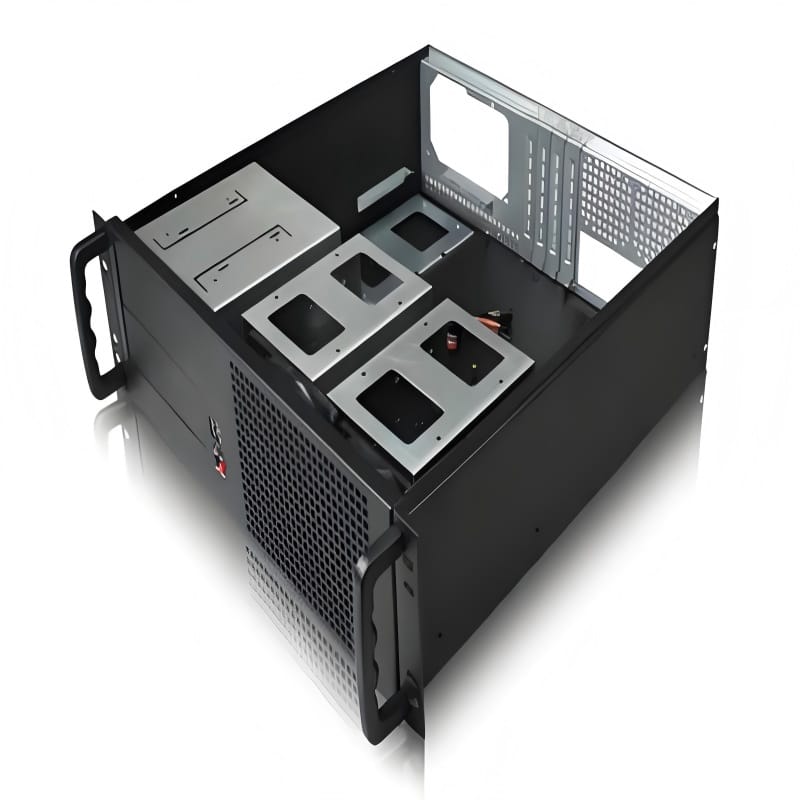
Think of sheet metal work like “paper folding”—you take a thin, flat sheet of metal and cut, bend, or punch it into the desired shape. Examples: refrigerator shells, air conditioner casings, computer chassis, and car body panels.
2. What Are Machined Parts?
Machined parts are produced by mechanical machining—using machine tools to cut away unwanted material from a solid block or bar, leaving the final shape.
Common machining methods include: turning, milling, drilling, boring, and grinding. The raw material is usually a solid billet, such as round steel bars, square blocks, copper rods, or aluminum bars.
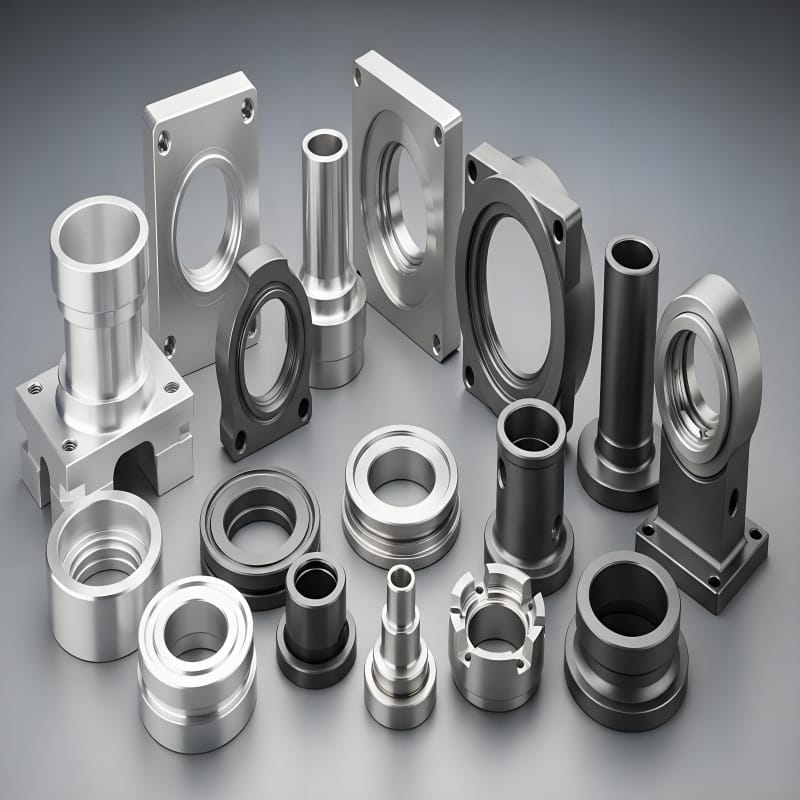
Think of machining like “sculpting”—you start with a solid lump of metal and carve away material with cutting tools to create the desired shape. Examples: engine blocks, bearings, gears, and molds.
3. Core Differences Between Sheet Metal and Machined Parts
1) Raw Material Form
This is the most fundamental difference.
- Sheet metal: uses metal sheets, usually less than 6 mm thick—e.g., aluminum sheet, steel plate, stainless sheet.
- Machined: uses solid billets, such as round bars, square stock, forgings, or castings. Materials can be metal, plastic, or even ceramics.
2) Processing Method
- Sheet metal: shapes the material through bending, punching, stretching, etc. This is a plastic forming process—the material thickness stays basically the same.
- Machined: removes material by cutting, drilling, milling, turning, etc. This is a subtractive manufacturing process.
3) Thickness Consistency
This is the most intuitive way to tell them apart.
- Sheet metal: thickness is uniform across the entire part. Even after bending or stamping, the thickness remains nearly unchanged.
- Machined: thickness can vary from one area to another because cutting can create different dimensions freely.
4) Machining Precision
- Sheet metal: relatively lower precision, with tolerances usually around ±0.1–0.2 mm.
- Machined: very high precision—CNC machining can achieve ±0.05 mm or even tighter.
5) Cost and Batch Size
- Sheet metal: ideal for large-volume production. Once a die is made, you can punch dozens of parts per minute, making each piece very cheap. For medium batches (2000+ pieces), sheet metal is usually 30–60% cheaper than machining . Of course, sheet metal processing can also be used to produce a small quantity of products, but the specifics depend on the design method of the technical personnel
- Machined: better for small batches or one-off custom parts. No mold costs, so prototyping is fast. For small quantities (under 10 pieces), machining is more cost-effective.
6) Applications
- Sheet metal: widely used in construction, electronics, telecommunications, home appliances—e.g., housings, cabinets, enclosures.
- Machined: used in precision machinery, automotive, aerospace, medical—e.g., engine blocks, bearings, gears, molds, precision connectors.
7) Surface Finishing
Both can be surface-treated, but methods and purposes differ:
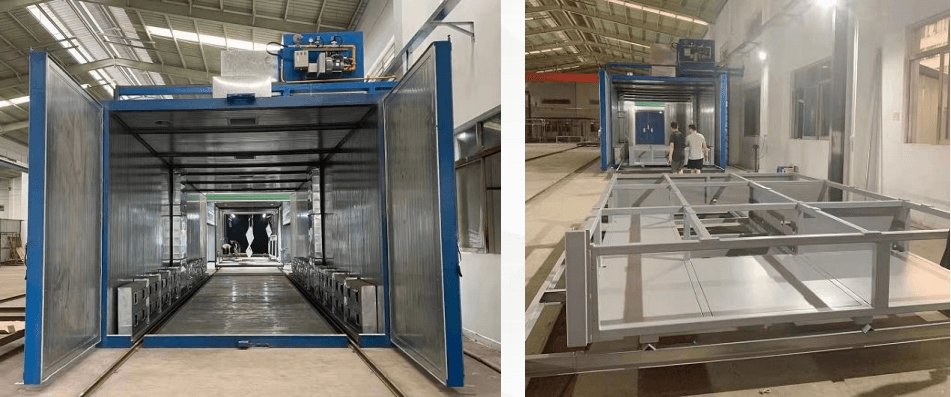
- Sheet metal: common finishes include powder coating, electroplating, phosphating, and painting. Powder coating (baking paint) is very common for equipment enclosures.
- Machined: common finishes include sandblasting, anodizing, blackening, and chrome plating. Sandblasting is often used to hide tool marks.
4. How to Quickly Identify a Physical Part
Here’s a simple checklist to help you decide:
| Aspect | Sheet Metal Part | Machined Part |
|---|---|---|
| Thickness | Same thickness everywhere | Thickness can vary across the part |
| Raw material | Made from thin sheet (≤6 mm) | Made from solid bar or block |
| Structure | Often shell‑like, box‑shaped, or frame‑type | Often solid, with complex 3D shapes |
| Precision | Relatively loose tolerances | Tight tolerances, high accuracy |
| Surface | Often painted or coated | Often sandblasted, anodized, etc. |
| Tool marks | Has bending radii, stamping marks | Shows cutting or milling marks |
The easiest rule: On a mechanical drawing, check if the part thickness is constant—sheet metal parts have uniform thickness; machined parts do not.
5. How to Choose the Right Process?
Neither process is inherently better—it depends on your needs. Consider these factors:
| Scenario | Recommended Process | Reason |
|---|---|---|
| Large‑volume enclosures or shells | Sheet metal | Low cost, high efficiency |
| Small batches or prototypes | Machining | No mold needed, fast turnaround |
| High‑precision, complex 3D shapes | Machining | Accuracy up to ±0.05 mm |
| Thin‑wall, large structural parts | Sheet metal | High material utilization, lightweight |
| Parts with internal cavities, threads, cross‑holes | Machining | Hard to achieve with sheet metal |
| Simple bends or stamped shapes | Sheet metal | Simple process, low cost |
Understanding the strengths of each process helps you make better decisions during design, prototyping, and mass production—saving both cost and time.
6.Summary
The core difference boils down to this:
- Sheet metal parts are “folded” into shape.
- Machined parts are “carved” into shape.
Sheet metal starts with thin sheets and uses bending, stamping, and stretching—thickness stays uniform, and it’s great for high‑volume production of housings and enclosures.
Machined parts start with solid billets and use cutting and drilling to remove material—they offer high precision and are ideal for small‑batch production of complex, precision components.
In practice, by observing whether the part thickness is consistent, what the raw material looks like, the structural type, and the precision requirements, you can quickly and accurately tell whether a part is sheet metal or machined.
Contact Us
Click here: Contact Us
Email: [email protected]
Author:David Wu
URL: https://zhmfr.com
video URL:https://www.youtube.com/@David-OEM
China Kewei Intelligent Technology Co., Ltd
Address:No. 23, Yexing Road, Xiangxi Industrial Zone, Liaobu Town, Dongguan City, Guangdong Province, China
With our profound expertise in customized sheet metal manufacturing services, CNC milling and turning, and metal stamping processing, we meet the complex needs of the automation equipment industry, new energy storage industry, and manufacturing industry. Our service portfolio includes automation equipment enclosures, precision mechanical parts, energy storage cabinet enclosures, and other customized metal products. We use advanced laser cutting, welding, and forming technologies to produce parts with strict tolerances and excellent surface finish. Whether you need small batch prototypes for research and development or large-scale production for assembly lines, our scalable solutions ensure the quality, cost-effectiveness, and on-time delivery of your industrial projects
相关文章:
 The Complete Guide to Sheet Metal Fabrication: Processes, Materials, and Best Practices
Custom Cut Sheet Metal: A Complete Guide for Buyers and Engineers
The Complete Guide to Sheet Metal Fabrication: Processes, Materials, and Best Practices
Custom Cut Sheet Metal: A Complete Guide for Buyers and Engineers
 Custom Metal Enclosures in China: Your Complete Guide to OEM Sheet Metal Housings
 Custom Sheet Metal Solutions: What Kewei Can Do for Your Business