Powder coating, plating, anodizing, and passivation — a practical checklist to ensure quality before your parts leave the factory.
You have spent weeks finalising the design, negotiating the price, and approving the samples. The sheet metal parts are manufactured, packaged, and shipped across the ocean. They finally arrive at your warehouse — and you open the carton to find:
- Orange peel texture on what was supposed to be a smooth powder‑coated surface
- Rust spots appearing on “zinc‑plated” parts within a week
- Colour mismatch between batches that are supposed to be identical
- Peeling paint that comes off with a simple scratch test
Sound familiar? If you have sourced sheet metal parts from overseas, you have likely encountered at least one of these surface finishing issues.
The truth is: Surface finishing is one of the most misunderstood and most problematic areas in sheet metal fabrication. It looks simple on the drawing — “Powder coating, RAL 9010, matte finish” — but achieving that consistently, batch after batch, requires far more than just spraying powder on metal.
This guide is written for you — the overseas buyer. We will walk through the most common surface finishing methods, the hidden factors that affect quality, and a practical checklist to ensure what you order is what you actually receive.
note: Due to China’s environmental policies, metal surface treatment is typically carried out in centralized industrial zones, meaning your supplier will most likely outsource this process. Some capable suppliers do have their own in-house compliant facilities. Either way, be sure to clarify this with your supplier upfront.
Part 1: The 4 Most Common Surface Finishes — and What You Need to Know
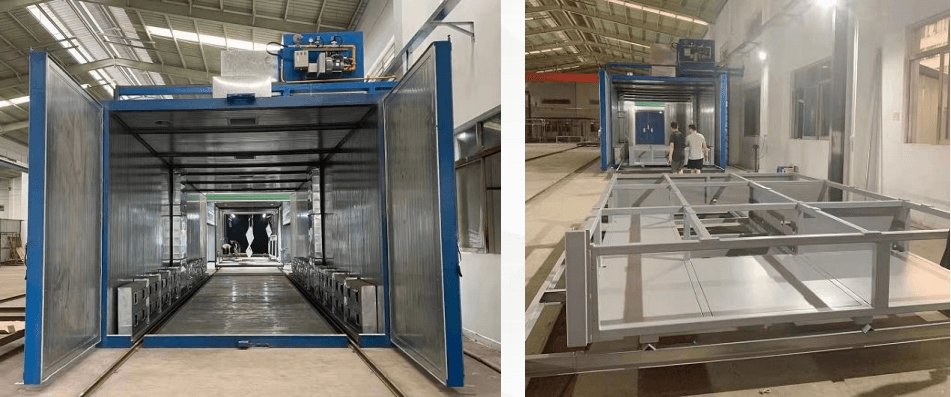
1. Powder Coating — Durable, Attractive, and Widely Used
Powder coating is the most popular finish for sheet metal parts — and for good reason. It is durable, looks great, and comes in almost any colour.
The “behind the scenes” truth:
Powder coating is not just about spraying powder and baking it. The pre‑treatment stage before spraying is actually MORE important than the spraying itself.
| Process Step | What It Does | Why It Matters |
|---|---|---|
| Degreasing | Removes oil from cutting and handling | If oil remains, powder will not stick |
| Phosphating / Silane treatment | Creates a micro‑rough surface for adhesion | Without this, the coating will peel within months |
| Drying | Removes all moisture before spraying | Trapped moisture causes bubbles and blisters |
| Powder spraying | Applies the coloured powder | Even thickness is key — too thin = poor coverage, too thick = orange peel |
| Curing (baking) | Melts and hardens the powder into a smooth film | Time and temperature must be precise |
What can go wrong:
| Defect | Likely Cause |
|---|---|
| Orange peel (rough, wrinkled surface) | Curing temperature too high, or powder applied too thick |
| Pinholes (tiny dots) | Trapped air or moisture in the pre‑treatment |
| Thin edges | Powder “pulls back” on sharp corners during curing (normal to some degree, but minimisable) |
| Colour difference between batches | Powder batch variation or curing temperature differences |
Questions to ask your supplier:
- “What is your pre‑treatment process? Degreasing + phosphating, or degreasing + silane?”
- “Do you have a thickness gauge to check coating thickness? What is your target range?” (Standard: 60–80 microns for indoor, 80–120 microns for outdoor)
- “Can you provide a salt spray test report for outdoor parts?” (This measures corrosion resistance)
2. Zinc Plating / Electroplating — Corrosion Protection for Structural Parts
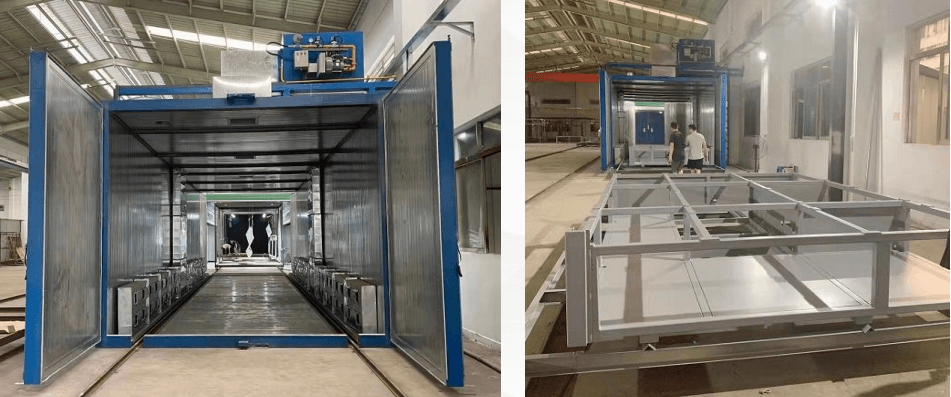
Zinc plating is commonly used for parts that need corrosion protection but do not require a decorative colour finish — think brackets, internal structural parts, and hardware.
The “behind the scenes” truth:
The thickness of the zinc layer is measured in microns, and it is very thin (typically 5–15 microns). That means the plating process must be carefully controlled — and even more importantly, the part must be completely clean before plating, or the zinc will not adhere properly.
What can go wrong:
| Defect | Likely Cause |
|---|---|
| White rust (white powdery spots) | Insufficient zinc thickness or poor passivation treatment |
| Red rust (brown spots) | Zinc layer too thin, or scratched off |
| Uneven colour (some areas darker, some lighter) | Uneven current distribution in the plating bath |
| Hydrogen embrittlement (cracking of high‑strength steel parts) | Hydrogen gas absorbed into the metal during plating — can cause parts to snap during assembly |
⚠️ Critical warning for high‑strength steel parts (Grade 8.8 or higher):
If your parts are made from high‑strength steel and need zinc plating, you MUST request hydrogen embrittlement relief baking (typically 4–6 hours at 200°C) immediately after plating. Many suppliers skip this step to save time. The result can be parts that crack or snap during assembly — a serious safety risk.
Questions to ask your supplier:
- “What is the target zinc thickness? Do you measure it?” (Typical: 8–12 microns)
- “Do you apply passivation (yellow/clear/black) after plating?” (Yes — this adds extra corrosion resistance)
- “If these are high‑strength steel parts, do you perform hydrogen embrittlement relief baking?”
3. Anodising — for Aluminium Parts
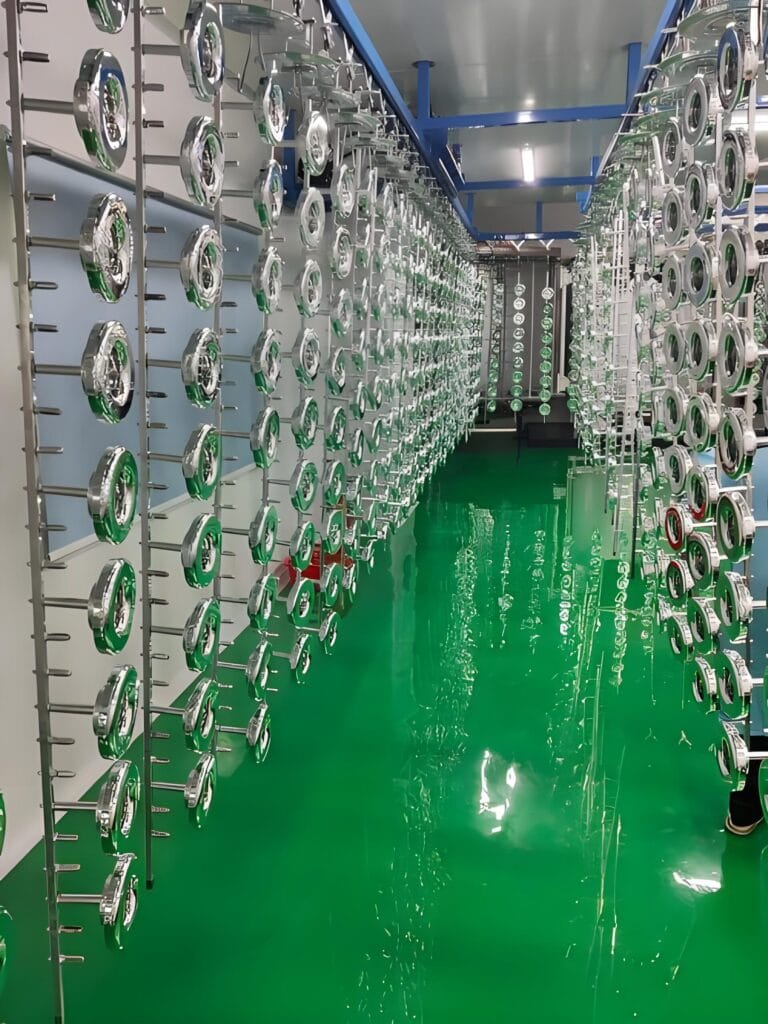
If your sheet metal parts are made of aluminium (such as 5052 or 6061 alloy), anodising is a common choice. It provides corrosion resistance and allows for colour (usually clear or black).
The “behind the scenes” truth:
Anodising is NOT a coating — it is a conversion process that turns the surface layer of aluminium into a hard, protective oxide layer.
| Type | Thickness | Use Case |
|---|---|---|
| Clear/Chromic anodising | Very thin (~2–5 microns) | Corrosion resistance, minimal dimensional change |
| Sulphuric anodising (hard coat) | 10–25 microns (or thicker) | Wear resistance, coloured finishes (black, gold, etc.) |
What can go wrong:
| Defect | Likely Cause |
|---|---|
| Colour inconsistency | Aluminium alloy variations — different batches of the same grade can anodise to slightly different shades |
| “Orange peel” or rough surface | Aluminium surface was not properly polished or etched before anodising |
| Seal failure | If the anodised layer is not properly sealed, it can absorb dirt and become discoloured |
Important note for your design:
Anodising is semi‑transparent — the final colour is affected by the underlying aluminium’s original surface finish. A #4 brushed finish will anodise differently than a mirror‑polished surface. Always request a sample of the actual finish before approving mass production.
Questions to ask your supplier:
- “What type of anodising do you recommend for our application? Clear or hard coat?”
- “Can you provide a colour sample on the actual material grade we are using?”
4. Stainless Steel Passivation — Restoring Natural Corrosion Resistance
If your parts are made of stainless steel (304, 316, etc.), they are naturally corrosion‑resistant — but the surface can still rust if contaminants from manufacturing (cutting oil, grinding dust, iron particles) remain embedded in the surface.
Passivation is a chemical process that removes these contaminants and restores the natural corrosion resistance of stainless steel.
The “behind the scenes” truth:
Many suppliers skip passivation entirely because “stainless steel does not rust.” This is a dangerous assumption. If your stainless parts are exposed to moisture or chemicals, they WILL rust if not properly passivated.
Questions to ask your supplier:
- “Do you perform passivation on stainless steel parts? What chemical do you use?” (Correct answer: citric acid or nitric acid)
- “Do you test passivation quality? (e.g., water immersion or copper sulphate test)”
Part 2: The 3 Most Common Surface Finish Complaints — and How to Prevent Them
Complaint #1: “The colour does not match the RAL number I specified.”
Why this happens:
RAL colours are standard in theory, but in practice:
- Different powder manufacturers have slightly different formulations for the same RAL code
- Curing temperature variations can shift the colour (especially for whites and light colours)
- Gloss level (matte vs. satin vs. glossy) also affects how we perceive colour
How to prevent it:
- Never rely on a RAL number alone. Always request a physical colour sample (a flat metal plate painted with the actual powder) and keep it as your reference.
- Ask for colour tolerance acceptance criteria — for example, ΔE ≤ 1.0 (a colour difference measurement standard)
- Request that the supplier orders powder from the same brand for repeat orders
What to put in your purchase agreement:
“Colour tolerance: ΔE ≤ 1.0 compared to the approved master sample. Rejection if visible colour difference under standard D65 lighting.”
Complaint #2: “The powder coating chips and peels easily.”
Why this happens:
This is almost always a pre‑treatment failure — not a powder quality issue. Either:
- The part was not properly degreased (oil remained on the surface)
- The phosphating/silane step was skipped or too short
- The curing temperature was too low (the powder did not fully cross‑link)
How to prevent it:
- Ask for a cross‑cut adhesion test (also called a “tape test” or “百格测试”) — this is a simple but effective way to check adhesion
- If your parts will be used outdoors or in corrosive environments, request a salt spray test report (ASTM B117 standard) — 48–72 hours without rust is a good benchmark
- Ask to see their pre‑treatment line during a factory visit, or request photos
What to put in your purchase agreement:
“Adhesion: Cross‑cut test per ASTM D3359, rating ≥ 4B. No peeling after tape test.”
Complaint #3: “Parts from the same batch have different gloss levels.”
Why this happens:
Gloss is affected by:
- Curing temperature — if the oven has hot spots, some parts cure at higher temperatures, becoming glossier
- Powder thickness — thicker powder tends to look more “orange peel” and less glossy
- Racking position — parts hanging near the oven door cure differently than parts in the centre
How to prevent it:
- Ask your supplier how they measure and record gloss levels during production (a gloss meter is the standard tool)
- Define acceptable gloss tolerance in your specification — e.g., “Gloss at 60°: 40–50 units”
- For colour‑sensitive parts, consider requiring that all parts from the same order be processed in the same oven batch
Part 3: Your Surface Finish “Communication Checklist”
Before you finalise your order, send this checklist to your supplier. It makes your expectations clear and helps the supplier understand exactly what you need.
- □ Material grade confirmed — e.g., “SPCC cold‑rolled steel” vs “SGCC galvanised steel” (this matters for powder coating adhesion)
- □ Surface preparation specified — e.g., “Powder coating requires phosphating pre‑treatment” or “Aluminium requires chromate‑free conversion coating”
- □ Colour standard defined — e.g., “RAL 9010, but MUST be approved by a physical sample before mass production”
- □ Coating thickness range specified — e.g., “60–80 microns for powder coating”
- □ Gloss range defined — e.g., “Gloss at 60° = 30–40 units”
- □ Corrosion resistance requirement — e.g., “Salt spray test 48 hours, no red rust”
Before Approving Mass Production:
- □ Physical colour sample (on the actual material) approved and kept as a master sample
- □ First Article Inspection (FAI) report includes surface finish measurements (thickness, gloss, adhesion test)
- □ Photos of the finished parts from the first batch, showing all visible surfaces
Before Shipping:
- □ Packaging confirmed — parts separated by foam/plastic to prevent scratches during transit
- □ Batch traceability — parts from different production batches are clearly labelled and separated
Part 4: Simple “Field Tests” You Can Do When Parts Arrive
You do not need expensive lab equipment to do basic surface finish checks. Here are three simple tests you can perform when your shipment arrives:
1. The Cross‑Cut / Tape Test (Adhesion Check)
How to do it:
- Make a grid of 6–10 small squares (about 1mm × 1mm) on the coated surface using a sharp blade (cut through the coating to the metal)
- Press a piece of strong adhesive tape firmly over the grid
- Pull the tape off quickly at a 90° angle
- Check: If more than 5% of the squares have peeled off, adhesion is poor
What it means: This is a simple but reliable test. Poor adhesion means the pre‑treatment was not done properly — and the coating will likely fail over time.
2. The “Scratch and Smell” Test (for Powder Coating)
How to do it:
- Scratch the powder coating surface with a coin or key
- If it scratches easily and smells like burnt plastic → curing temperature was too high
- If it comes off as powder (not a solid film) → curing temperature was too low or time too short
3. The 24‑Hour Water Soak Test (for Plating)
How to do it:
- Place a plated part in fresh water for 24 hours
- If white or red rust appears → plating thickness is insufficient
Part 5: A Practical Example — What a Good Specification Looks Like
Instead of writing on the drawing: “Powder coating, RAL 9010” — which leaves too much room for interpretation — write something like this:
Surface Finish Specification:
| Item | Requirement |
|---|---|
| Type | Polyester powder coating |
| Colour | RAL 9010 (white) — approved physical master sample required before mass production |
| Finish | Matte, gloss at 60° = 30–40 units |
| Thickness | 60–80 microns |
| Pre‑treatment | Degreasing + zinc phosphating (or silane equivalent) |
| Adhesion | Cross‑cut test per ASTM D3359, rating ≥ 4B |
| Corrosion resistance | Salt spray test (ASTM B117) 48 hours, no red rust |
| Appearance | No visible orange peel, pinholes, drips, or scratches on visible surfaces |
This level of detail may seem excessive, but it does two things:
- It forces the supplier to understand exactly what you expect
- It gives you clear grounds to reject substandard parts
Summary: Your 5‑Step Action Plan for Stress‑Free Surface Finishing
| Step | Action |
|---|---|
| Step 1 | Define your finish requirement in detail — not just “powder coating” but thickness, gloss, pre‑treatment, and testing standards |
| Step 2 | Request and approve a physical sample BEFORE mass production |
| Step 3 | Confirm that your supplier has proper QC equipment (thickness gauge, gloss meter, adhesion test tools) |
| Step 4 | Include surface finish acceptance criteria in your purchase agreement |
| Step 5 | Perform basic field tests (tape test, water soak) when parts arrive |
Final Word: Surface Finish Is a Partnership, Not a Transaction
Surface finishing is the “last mile” of sheet metal fabrication. It is what your customers see — and it is often the first thing they judge. A part that is structurally perfect but has a poor finish looks “cheap” and can damage your brand reputation.
The good news is: with clear communication, reasonable specifications, and a few simple checks, surface finish problems are completely avoidable.
The best suppliers will work with you to achieve the finish you need — not just “what is standard” or “what is easiest.” They will ask questions, provide samples, and improve their process until it is right.
And when you find that supplier, the extra effort in communication will pay off in every single shipment.
Contact Us
Click here: Contact Us
Email: [email protected]
Author:David Wu
video:https://www.youtube.com/@David-OEM
China Kewei Intelligent Technology Co., Ltd
Address:No. 23, Yexing Road, Xiangxi Industrial Zone, Liaobu Town, Dongguan City, Guangdong Province, China
With our profound expertise in customized sheet metal manufacturing services, CNC milling and turning, and metal stamping processing, we meet the complex needs of the automation equipment industry, new energy storage industry, and manufacturing industry. Our service portfolio includes automation equipment enclosures, precision mechanical parts, energy storage cabinet enclosures, and other customized metal products. We use advanced laser cutting, welding, and forming technologies to produce parts with strict tolerances and excellent surface finish. Whether you need small batch prototypes for research and development or large-scale production for assembly lines, our scalable solutions ensure the quality, cost-effectiveness, and on-time delivery of your industrial projects

相关文章:
 The Complete Guide to Sheet Metal Fabrication: Processes, Materials, and Best Practices
Custom Cut Sheet Metal: A Complete Guide for Buyers and Engineers
The Complete Guide to Sheet Metal Fabrication: Processes, Materials, and Best Practices
Custom Cut Sheet Metal: A Complete Guide for Buyers and Engineers
 Sheet Metal Parts Quality Issues: Is It the Supplier’s Fault or Yours?
 Custom Metal Enclosures in China: Your Complete Guide to OEM Sheet Metal Housings