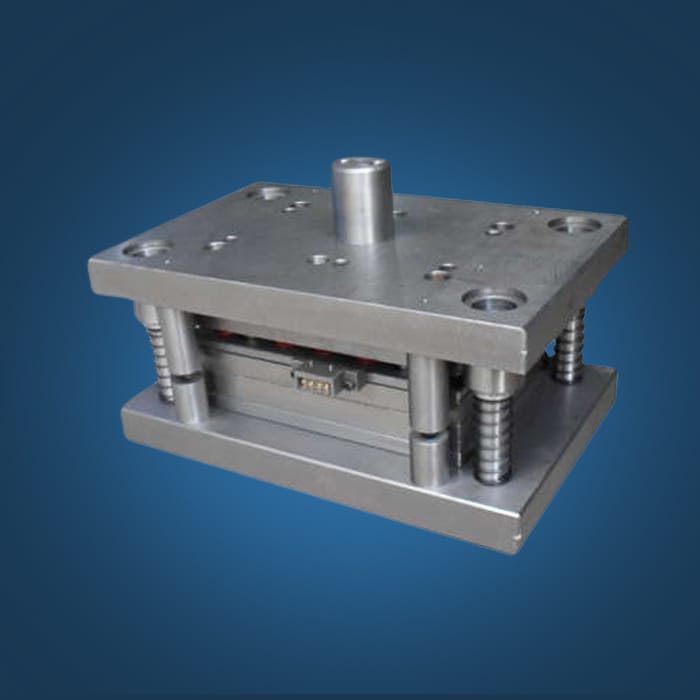
Understanding why tooling costs exist, when they’re necessary, and how to avoid paying for them twice — a practical guide for international procurement professionals.
You have received a quote for your sheet metal parts. The price per piece looks reasonable, but there is an extra line item that catches your attention:
“Tooling Cost: $XXX — One-time charge”
Your first thought might be: “Why do I need to pay for tooling? Is not that the factory’s equipment?” Or perhaps: “Is this a legitimate charge, or just a way to make more money from my order?”
These are completely valid questions. As an overseas buyer, you want to be sure you are not paying for something unnecessarily — especially when you are not sure what you are actually paying for.
This guide is written for you. We will explain:
- What tooling and fixturing actually mean in sheet metal fabrication
- When you should expect to pay for it — and when you should not
- The difference between “one-time tooling” and “amortised tooling”
- How to protect yourself from unnecessary or duplicate charges
- Practical questions to ask your supplier before agreeing to any tooling fee
Part 1: What Exactly Is “Tooling” in Sheet Metal Fabrication?
In sheet metal work, “tooling” generally refers to three different things — and understanding the difference is key to knowing what you are paying for.
Type 1: Punching Tooling(Advantages of Stamping)
If your parts are manufactured using a turret punch press (rather than laser cutting), the machine uses specific punch and die sets to create holes, cutouts, and formed features.
- Standard tooling: Round holes, square holes, and common shapes — these are typically already owned by the factory and should not be charged to you.
- Special/custom tooling: If your part requires a unique shape, size, or custom form feature that the factory does not have in their standard inventory, they will need to manufacture or purchase a custom punch and die. This costs money, and it is reasonable for this cost to be passed to you.
| Item | Detail |
|---|---|
| Cost range | $200 – $2000 per custom tool, depending on complexity and size |
| When you should pay | Only for custom shapes the factory does not already have |
| When you should NOT pay | For standard round or square holes, or if the factory claims they need new tooling but you have confirmed the shapes are standard |
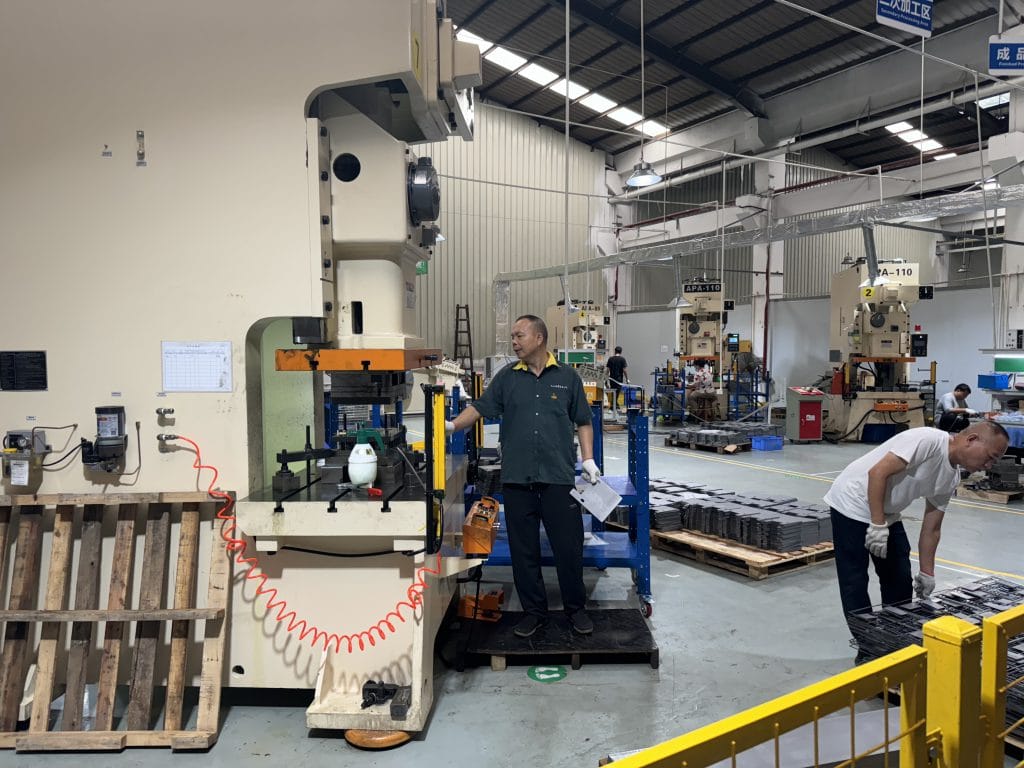
Type 2: Bending Tooling(Sheet Metal Bending)
Bending tooling consists of the upper punch and lower V‑die used on a press brake to fold sheet metal into your desired angles.
- Standard tooling: Most factories have a wide range of standard punches and V‑dies for common material thicknesses (e.g., 1.0mm, 1.5mm, 2.0mm, 3.0mm). These are part of the factory’s standard equipment and should not be charged separately.
- Special tooling: If your part requires an unusually sharp inside radius, an unusually long or short bending length, or a custom shape (e.g., a step bend or offset bend), custom bending tooling may be required.
| Item | Detail |
|---|---|
| Cost range | $200 – $1,500 per custom bend tool set |
| When you should pay | Only for non‑standard bend radius, length, or profile requirements |
| When you should NOT pay | For standard 90° bends within the factory’s normal capability range |
Type 3: Welding / Assembly Fixtures(Methods for controlling welding deformation)
This is the most commonly overlooked tooling cost — and often the one that causes the most quality problems when skipped.
Fixtures (or jigs) are custom‑made frames or holders that:
- Hold parts in the correct position during welding
- Ensure consistent alignment from one part to the next
- Prevent warping and distortion from welding heat
Why this matters: Without a proper welding fixture:
- Each welded part may come out slightly different
- Critical hole positions can shift
- The part may not fit in your final assembly
| Item | Detail |
|---|---|
| Cost range | $300 – $2,000+ per fixture, depending on complexity |
| When you should pay | For complex welded assemblies where alignment between multiple parts is critical |
| When you should NOT pay | If your parts are simple, single‑piece bends with no welding |
Important: The fixture cost is often charged once for the first order — but the fixture itself stays at the factory. It is used for your future repeat orders at no additional cost (unless major design changes are made). The factory owns the physical fixture, but you are paying for its design and construction.
Part 2: The Two Charging Models — Which One Is Right for You?
When a supplier quotes tooling costs, they typically use one of two models:
| Model | What It Means | Best For |
|---|---|---|
| Separate One‑Time Tooling Charge | You pay the full tooling cost upfront, separately from the part price. After this, the part unit price is lower because tooling is fully paid. | When you plan to order in multiple batches over time. The tooling investment is spread across many parts. |
| Amortised Tooling | The tooling cost is built into the unit price (typically spread across the first batch). You pay no separate tooling fee, but your per‑part price is higher for the first order. | When you only need one batch of parts and do not plan to reorder. Or when your order quantity is small and tooling cost would be too high as a separate charge. |
Which one should you choose?
- If you are planning repeat orders → Choose the separate one‑time tooling charge. You will pay more upfront, but your unit price will be significantly lower on every future order.
- If you only need a one‑time batch → Choose amortised tooling. You pay no separate fee, but your unit price will include the tooling spread across your parts.
An example to make it clear:
Let us say a custom welding fixture costs $1,000. You are ordering 500 parts.
| Charging Model | Tooling Fee | Part Price | Total First Order Cost | Future Order Part Price |
|---|---|---|---|---|
| Separate one‑time | $1,000 | $5.00 | $1,000 + (500 × $5) = $3,500 | $5.00 each |
| Amortised | $0 | $7.00 | 500 × $7 = $3,500 | $7.00 each |
Same total cost for the first order! But on future orders:
- With separate tooling: you only pay $5.00 each
- With amortised: you still pay $7.00 each (you are paying for the tooling again, effectively)
Bottom line: If you plan to reorder, always ask for separate tooling. If the supplier insists on amortised tooling but you want to reorder later, ask them to re‑quote with separate tooling — it will save you money in the long run.
Part 3: How to Know If You Are Being Charged Fairly
Here are some practical guidelines to help you assess whether a quoted tooling cost is reasonable:
Punching Tooling
| Tool Type | Typical Cost | What Affects the Cost |
|---|---|---|
| Standard round hole (any size up to 50mm) | $0 | Factory already owns these |
| Standard square/rectangular hole | $0 | Factory already owns these |
| Custom shape (D‑hole, special profile, keyhole) | $100 – $400 | Tool size and complexity |
| Large custom shape (> 80mm) | $300 – $800 | Larger tool = more material and machining time |
| Forming tool (embossing, louver, bridge, etc.) | $400 – $1,200 | Special geometry, requires precision grinding |
Bending Tooling
| Bend Type | Typical Cost | What Affects the Cost |
|---|---|---|
| Standard 90° bend, material ≤ 3mm | $0 | Factory has standard tools |
| Sharp radius bend (R < material thickness) | $200 – $500 | Requires special sharp punch |
| Extra long bend (> 3 metres) | $500 – $1,500 | Requires specially made long die |
| Special profile bend (U‑channel, Z‑bend) | $300 – $800 | Custom shape, multiple forming steps |
Welding Fixtures
| Fixture Complexity | Typical Cost | What Affects the Cost |
|---|---|---|
| Simple 2‑part alignment (no moving parts) | $300 – $600 | Simple steel frame with locating pins |
| Complex assembly (multiple parts, rotation needed) | $800 – $2,000+ | Precision machining, adjustable components, custom clamps |
Part 4: The Important Question — Who Owns the Tooling?
This is one of the most important questions for overseas buyers, and many people forget to ask it.
Scenario A: You paid the tooling cost as a separate one‑time charge
You have effectively paid for the tooling. While the physical tool is stored at the factory (for obvious reasons — you cannot use a 2‑ton press die at your office), you are the “owner” of that tooling.
This means:
- The factory cannot use this tooling to manufacture parts for other customers without your permission.
- If you want to switch to another supplier in the future, you have the right to request the tooling be transferred or duplicated (though in practice, transferring large dies is difficult).
Scenario B: The factory said “tooling is included in our unit price” (amortised tooling)
- The factory owns the tooling. They paid for it and recovered the cost through your part prices.
- You have no ownership claim to the tooling. The factory can use it for other customers if they want.
Recommendation: If you are planning long‑term sourcing — and especially if your parts require custom tooling — always negotiate for Scenario A. You want to own the tooling you paid for.
What About “Tooling Transfer” to Another Factory?
Here is a practical reality: Most tooling is not easily transferable.
- Punching tooling is specific to the brand and model of the punching machine (e.g., Amada vs. Trumpf vs. Murata)
- Bending tooling length and shank type may not fit another press brake
- Welding fixtures are designed for the factory’s specific workshop layout, welding robot arm reach, and worker height
What you CAN do:
- Ask for CAD drawings and specifications of the tooling you paid for — so if you need to move production, the tooling can be re‑manufactured by another supplier at lower cost
- If you have a very large and important project, consider paying for two sets of tooling (one at the primary supplier, one as a backup) — this is common in automotive and aerospace industries
Part 5: How to Avoid Paying for “Phantom” Tooling
Some less reputable suppliers may try to charge tooling costs that are unnecessary. Here is how to spot and avoid them:
Red Flag #1: “We need new tooling for every order, even for the same part.”
The truth: Once custom tooling is made, it can be reused for future orders of the same part. There may be a maintenance fee (sharpening or cleaning) after many uses, but this is a small annual cost (typically $50–$200), not a full re‑tooling charge.
What to say: “We have already paid for tooling on the first order. For this repeat order, there should be no new tooling charge unless there are design changes. Please confirm.”
Red Flag #2: “We need new tooling because we changed the material.”
The truth: Changing from SPCC to galvanised steel or aluminium usually does not require new tooling. The same punch and die can cut different materials — only the clearance (gap) may need to be adjusted, which does not require new tooling.
What to say: “Please confirm that this is the same tooling as before, and the material change does not require new tooling. If it does, please explain why.”
Red Flag #3: “Tooling cost is separate but we will not show you the tooling design.”
The truth: If you are paying for tooling, you have the right to understand what you are paying for. A transparent supplier will share:
- Tooling type (punch, die, or fixture)
- A simple sketch or photo of the tooling design
- Estimated tool life (how many parts it can produce before needing replacement)
What to say: “Since we are paying for the tooling, can you share a drawing or photo of the tooling design for our records? This will also help us for future reference.”
Red Flag #4: “Tooling cost is charged per part, indefinitely.”
The truth: Some suppliers may try to charge a small “tooling fee” on every single part — not a one‑time setup but a recurring line item. This is usually not legitimate unless there is a specific consumable component involved (e.g., special cutting blades that wear out quickly).
What to say: “Is this a one‑time tooling charge, or is it included in every unit price? Please clarify.”
Part 6: A Practical Example — Walking Through a Real Quote
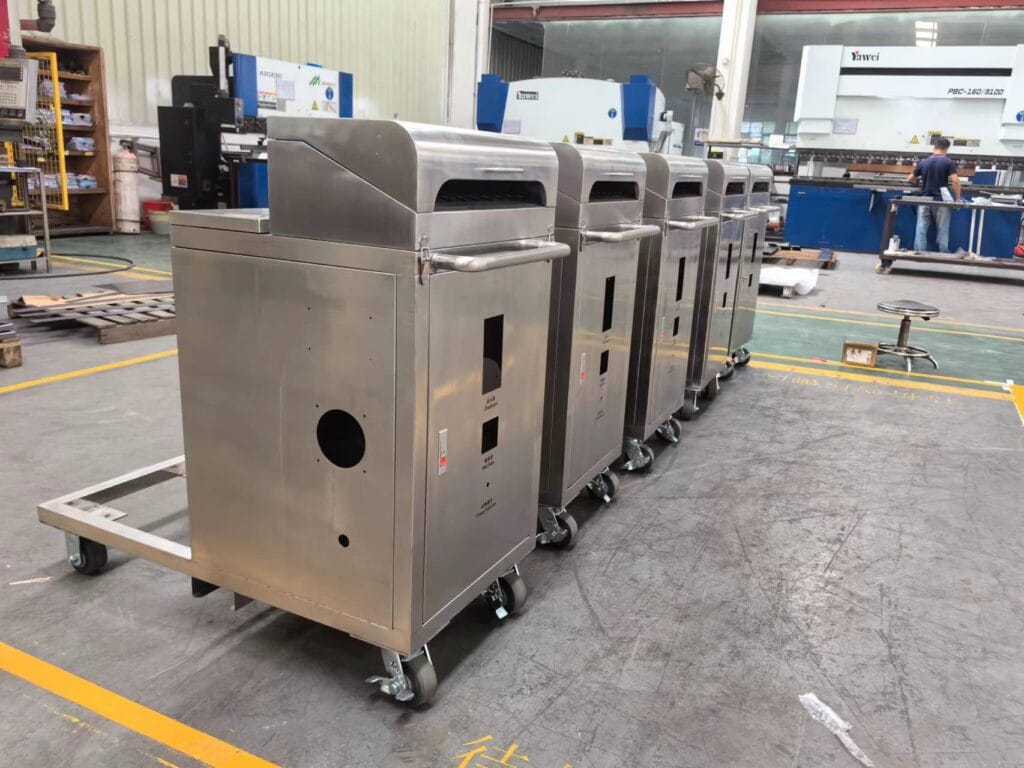
Let us say you are sourcing a steel enclosure box. It has:
- Laser‑cut flat panels
- Bends on all four sides
- Some custom‑shaped holes on the front panel
- Four panels welded together
Here is what your quote breakdown should look like:
| Item | Description | Cost |
|---|---|---|
| Material | SPCC 1.5mm cold‑rolled steel | $350 |
| Laser cutting | Includes nest layout, cutting time, gas | $120 |
| Bending | 12 bend operations total, using standard tooling | $80 |
| Welding | 4 seams, using standard welding, no custom fixture needed | $60 |
| Surface treatment | Powder coating, RAL 9005, 60‑80 microns | $150 |
| Packaging | Cardboard boxes with foam inserts | $40 |
| Subtotal (for 50 parts) | $800 | |
| One‑time Tooling | Custom punching tool for front panel special shape (1 die) | $250 |
| Total | $1,050 |
In this example:
- The tooling cost ($250) is a one‑time charge for a custom punching die
- All standard bending uses existing tooling — no extra cost
- No welding fixture is needed because the assembly is simple
This is a fair and transparent quote,Of course, this example does not include shipping costs and the costs of other accessories, such as casters, foot cups, hinges, door locks, and other accessories. These can be provided separately if needed. Generally, suppliers will install the whole unit, which does not include non-metallic components such as electronic components and applications
Part 7: Your Tooling Communication Checklist
Before you accept any quote that includes tooling charges, send this checklist to your supplier:
- □ What type of tooling is this? (Punching die, bending die, welding fixture, or other?)
- □ Why is custom tooling needed? (Standard tooling will not work because…?)
- □ Is this a one‑time charge or amortised? (If amortised, how many parts is it spread across?)
- □ What is the expected tool life? (How many parts before it needs to be replaced?)
- □ If we repeat the order later, will we pay tooling again? (Yes/No — if yes, why?)
- □ Who owns the tooling after we pay for it? (Us or the factory?)
- □ Can we get a drawing/photo of the tooling for our records? (For future reference)
- □ If we change suppliers later, can we take the tooling design with us? (Ideally, yes)
Summary: Key Takeaways
| Question | Answer |
|---|---|
| When should I pay for tooling? | Only for custom shapes, special bends, or complex welding fixtures — never for standard operations |
| Should I choose one‑time or amortised tooling? | One‑time if you will reorder. Amortised if it is a one‑time order only |
| Can I avoid tooling charges completely? | Yes — design your parts to use standard sizes and shapes as much as possible |
| What happens if I want to change suppliers? | You can request the tooling or its design drawings — but physical transfer is often difficult |
| How can I avoid overpaying? | Ask for a detailed breakdown, compare with typical costs listed above, and watch for “phantom” tooling charges |
Final Thought: Tooling Is an Investment, Not an Expense
When you pay for custom tooling in sheet metal fabrication, you are investing in consistency and quality for every part that follows. A properly made punch die or welding fixture ensures:
- Your parts fit together correctly — every time
- Production is faster and more reliable
- Your unit cost decreases on repeat orders
The key is to understand what you are paying for and to have a clear agreement on ownership, repeat use, and future costs. A transparent supplier will welcome your questions — because they have nothing to hide.
Remember: Tooling is the bridge between a one‑time prototype and reliable mass production. When you pay for it correctly once, you benefit from it for years to come.
Contact Us
Click here: Contact Us
Email: [email protected]
Author:David Wu
video URL:https://www.youtube.com/@David-OEM
China Kewei Intelligent Technology Co., Ltd
Address:No. 23, Yexing Road, Xiangxi Industrial Zone, Liaobu Town, Dongguan City, Guangdong Province, China
With our profound expertise in customized sheet metal manufacturing services, CNC milling and turning, and metal stamping processing, we meet the complex needs of the automation equipment industry, new energy storage industry, and manufacturing industry. Our service portfolio includes automation equipment enclosures, precision mechanical parts, energy storage cabinet enclosures, and other customized metal products. We use advanced laser cutting, welding, and forming technologies to produce parts with strict tolerances and excellent surface finish. Whether you need small batch prototypes for research and development or large-scale production for assembly lines, our scalable solutions ensure the quality, cost-effectiveness, and on-time delivery of your industrial projects
相关文章:
 Custom Cut Sheet Metal: A Complete Guide for Buyers and Engineers
The Complete Guide to Sheet Metal Fabrication: Processes, Materials, and Best Practices
Custom Cut Sheet Metal: A Complete Guide for Buyers and Engineers
The Complete Guide to Sheet Metal Fabrication: Processes, Materials, and Best Practices
 Custom Metal Enclosures in China: Your Complete Guide to OEM Sheet Metal Housings
 Custom Sheet Metal Solutions: What Kewei Can Do for Your Business