If you’re considering laser cutting for your project, the first question that usually comes up is: “Can this material be laser cut?”
It’s a fair question. Not every material responds well to a laser beam. Some cut beautifully. Others melt, warp, or release harmful fumes. And some are simply impossible.
This guide gives you a clear, practical answer—material by material—so you know exactly what CNC laser cutting can handle, and what you should avoid.
How Laser Cutting Works (Briefly)
Before we get into materials, here’s a quick reminder of how this works.
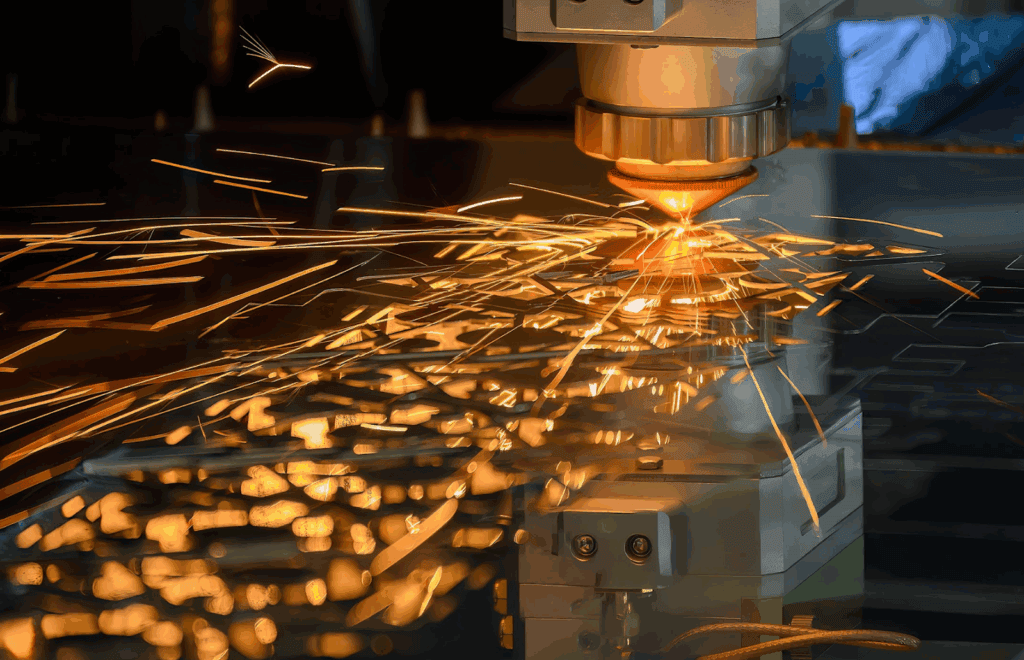
The CNC laser cutting machine focuses a high-power beam onto the surface of the material. The beam heats the material to its melting point or vaporization point, and there are generally three auxiliary gases used for laser cutting (nitrogen, oxygen, or compressed air).
Different materials absorb laser energy differently. They also react differently to heat. That’s why some materials cut like butter, while others turn into a mess.
Materials That Cut Well
Carbon Steel
Carbon steel is one of the most common materials for laser cutting. It absorbs the laser beam efficiently, cuts cleanly, and leaves a relatively smooth edge.
- Thickness range: up to about 25mm (1 inch) with oxygen assist
- Edge quality: clean, slight oxidation (dark edge) with oxygen
- Best uses: structural parts, automotive components, machinery frames
What to know: Oxygen assist gives faster cutting and handles thicker material, but leaves a dark, oxidized edge. If you need a clean, unoxidized edge, you can switch to nitrogen assist—but it’ll be slower and cost more.
Stainless Steel
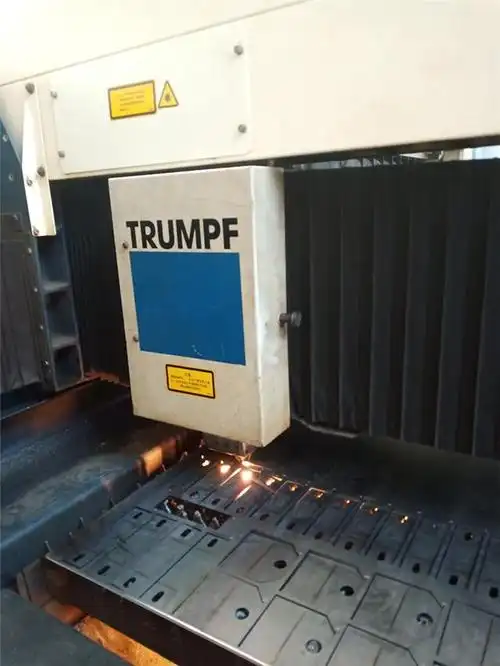
Stainless steel cuts very well with laser, especially with nitrogen assist. The cut edge stays bright and free of oxidation, which is often required for food-grade or cosmetic applications.
- Thickness range: up to about 12-15mm (0.5-0.6 inches)
- Edge quality: bright, smooth, no oxidation (with nitrogen)
- Best uses: kitchen equipment, medical devices, architectural panels
What to know: Nitrogen is expensive, and consumption is high. For thicker stainless, the gas cost alone can exceed the material cost. If edge appearance isn’t critical, some shops use oxygen or air to cut stainless at lower cost—but the edge will be darker and may require post-processing.
Aluminum
Aluminum is highly reflective, which used to make it difficult to laser cut. Modern fiber lasers handle it much better than older CO₂ lasers.
- Thickness range: up to 15-20mm, depending on laser power
- Edge quality: can be slightly rough on thicker sections, but generally clean
- Best uses: aerospace parts, automotive panels, electronics housings, heat sinks
What to know: Aluminum requires higher laser power because it reflects some of the beam energy. Cutting thick aluminum can be slower than cutting steel of the same thickness. The most common challenge is preventing dross (molten metal sticking to the bottom edge)—using the right gas and focal position is important here.Aluminum plate (6061-T6) is mainly used for CNC precision machining
Copper and Brass
Copper and brass are also reflective, but modern fiber lasers can cut them effectively.
- Thickness range: up to about 3-4mm for copper, slightly more for brass
- Edge quality: generally clean with proper settings
- Best uses: electrical components, decorative parts, plumbing fittings
What to know: Copper’s high thermal conductivity means heat dissipates quickly, making it harder to cut. High-powered fiber lasers are recommended, and cutting speed is typically slower than for steel.
Galvanized Steel
Galvanized steel (steel coated with zinc for corrosion resistance) can be laser cut, but the zinc coating creates additional considerations.
- Thickness range: up to 8-10mm
- Edge quality: good, but some zinc residue is normal
- Best uses: HVAC components, outdoor enclosures, automotive parts
What to know: The zinc coating can create minor edge dross and the cutting process may release zinc oxide fumes, so proper ventilation is necessary. Overall, it’s a common and well-understood application in laser cutting shops.
Titanium
Titanium cuts well with laser, but requires careful gas selection.
- Thickness range: typically up to 10-12mm, depending on laser power
- Edge quality: good, but requires experience to prevent oxidation
- Best uses: aerospace components, medical implants, marine applications
What to know: Titanium is reactive, so using oxygen assist can cause the edge to become brittle. Nitrogen or argon is usually preferred. Not every shop has experience with titanium—it’s worth asking about.
Materials That Don’t Cut Well (or Can’t Be Cut)
Carbon Fiber Composites
Carbon fiber is possible to cut with laser, but it’s not ideal.
The laser burns the epoxy resin binder, creating a heat-affected zone and releasing fumes. The cut edge can look charred, and the structural integrity may be compromised.
Common alternative: Waterjet or CNC routing is usually a better choice for carbon fiber.
PVC and Vinyl
Do not laser cut PVC or vinyl.
When heated, PVC releases chlorine gas, which combines with moisture in the air to form hydrochloric acid. This acid is extremely corrosive—it will damage the laser machine’s optics, metal components, and exhaust system.
It’s also dangerous for operators to breathe. Most reputable shops will refuse to cut PVC entirely.
High-Reflectivity Materials
Pure silver and gold are generally not laser cut due to reflectivity. Most laser beams just bounce off. Some specialized high-power fiber lasers can handle them, but it’s not practical for most fabrication shops.
Polycarbonate (Lexan)
Polycarbonate can be cut with laser, but with caution. The material absorbs laser energy well but tends to discolor and char along the cut edge. For thick polycarbonate, the cut edge may look brown and molten.
Better options include sawing or waterjet cutting for clean edges.
Glass
Laser cutting glass is possible but uncommon. The thermal stress from a laser beam tends to crack glass rather than cut it cleanly.
Glass is usually cut with waterjet, diamond blade, or specialized scoring techniques—not CO₂ laser.
Quick Reference Table
| Material | Laser Cuttable? | Notes |
|---|---|---|
| Carbon steel | ✅ Yes | Up to 25mm, oxygen or nitrogen assist |
| Stainless steel | ✅ Yes | Up to 15mm, nitrogen recommended for clean edge |
| Aluminum | ✅ Yes | Up to 15-20mm, requires high power |
| Copper | ✅ Yes | Up to 3-4mm, high power recommended |
| Brass | ✅ Yes | Up to 4-5mm, high power recommended |
| Galvanized steel | ✅ Yes | Up to 10mm, ventilation needed |
| Titanium | ✅ Yes | Up to 12mm, requires experience |
| Carbon fiber | ⚠️ Possible | Not ideal—waterjet preferred |
| PVC/Vinyl | ❌ No | Releases toxic, corrosive gas |
| Polycarbonate | ⚠️ Possible | May discolor; alternative methods often preferred |
| Glass | ❌ No | Cracks under thermal stress |
| Silver/Gold | ❌ No | Too reflective for most lasers |
What Determines If a Material Can Be Laser Cut?
If you’re wondering why some materials work and others don’t, it comes down to a few factors:
| Factor | Why It Matters |
|---|---|
| Reflectivity | High-reflectivity materials bounce the beam away |
| Thermal conductivity | Materials that conduct heat quickly require more power |
| Melting vs. burning | Materials that burn rather than melt often char |
| Vaporization point | Higher vaporization points require more energy |
| Chemical hazards | Some materials release toxic fumes when heated |
Contact Us
Click here: Contact Us
Email: David@zhmfr.com
Author:David Wu
video URL:Visit our YouTube to view videos
China Kewei Intelligent Technology Co., Ltd
Address:No. 23, Yexing Road, Xiangxi Industrial Zone, Liaobu Town, Dongguan City, Guangdong Province, China
With our profound expertise in customized sheet metal manufacturing services, CNC milling and turning, and metal stamping processing, we meet the complex needs of the automation equipment industry, new energy storage industry, and manufacturing industry. Our service portfolio includes automation equipment enclosures, precision mechanical parts, energy storage cabinet enclosures, and other customized metal products. We use advanced laser cutting, welding, and forming technologies to produce parts with strict tolerances and excellent surface finish. Whether you need small batch prototypes for research and development or large-scale production for assembly lines, our scalable solutions ensure the quality, cost-effectiveness, and on-time delivery of your industrial projects
相关文章:
 The Complete Guide to Sheet Metal Fabrication: Processes, Materials, and Best Practices
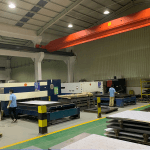 Comparison and Differences of Three Main Auxiliary Gases in Metal Laser Cutting
Custom Cut Sheet Metal: A Complete Guide for Buyers and Engineers
Comparison and Differences of Three Main Auxiliary Gases in Metal Laser Cutting
Custom Cut Sheet Metal: A Complete Guide for Buyers and Engineers
 From Materials Science to Manufacturing — Master the Core Technologies and Cost-Optimization Strategies for Corrosion-Resistant Metal Components