What Is a Vibratory Bowl Feeder?
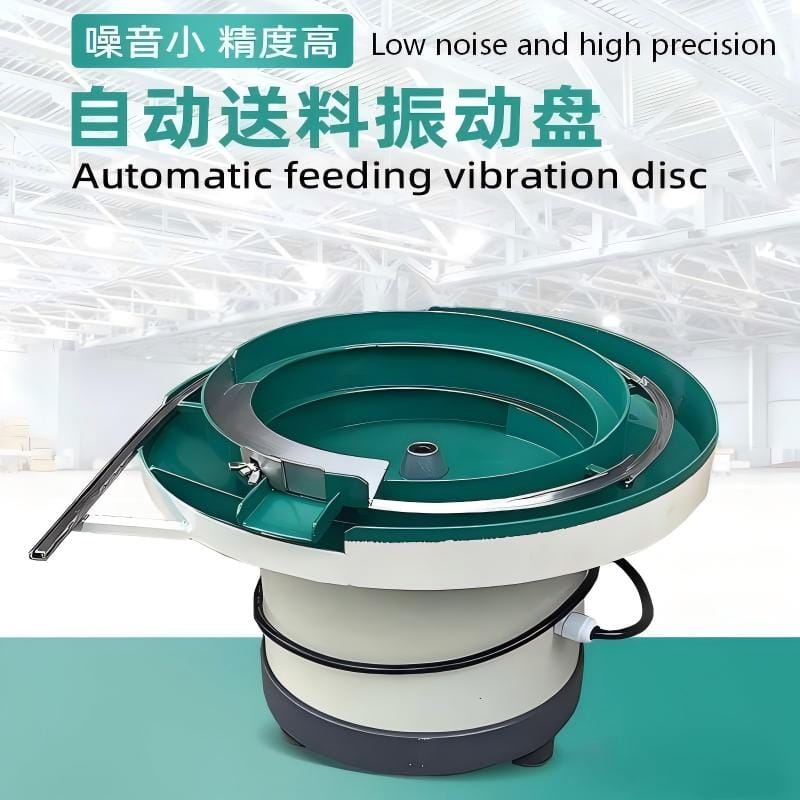
A vibratory bowl feeder is an industrial machine designed to automatically orient and feed parts to a production process or assembly line. It’s a specialized type of vibratory feeder that uses both vibration and gravity to move materials—most commonly small to medium-sized industrial components—from a random, jumbled state into a neatly organized, single-file stream.
Think of it as a high-speed, automated sorting system. Instead of workers manually picking up parts and placing them in the correct orientation, a vibratory bowl feeder does it continuously and consistently, feeding parts directly into the next stage of production—whether that’s an assembly machine, packaging line, or inspection station.
In simple terms: It will be a pile of identical parts (screws, nuts, caps, connectors) and “vibrates” them up a spiral track, filtering and flipping them along the way, so they come out the top all facing the same direction, ready for the next step.
How Does a Vibratory Bowl Feeder Work?
The working principle of a vibratory bowl feeder is based on a clever combination of vibration and gravity.
Here’s a step-by-step breakdown:
The Bowl and Parts:
Parts are loaded into the top “bowl” (hence the name). This bowl is a specially designed container with a spiral track running up its inside wall.He is produced through sheet metal processing.
The Vibrating Base:
The bowl sits on top of a base that houses the drive unit. This base contains a pulse electromagnet and a set of inclined spring leaves. When the electromagnet is switched on and off rapidly (at high frequency), it causes the spring leaves to flex, generating a small, rapid vibration.
Twist and Hop:
This vibration doesn’t just shake the bowl up and down. The angled springs create a “twisting” vibration, causing the bowl to both move vertically and rotate slightly. This unique motion makes the parts inside the bowl “hop” and “skip” forward along the spiral track.
Orientation and Sorting:
As the parts travel up the track, they pass over a series of custom-designed cutouts, air jets, wipers, or rails. These cleverly arranged devices act as filters(By continuously testing the parts provided by the customer and selecting a reasonable screening method, it can be simply understood as: throwing a batch of identical parts into the sky, and after free fall, the parts that meet the requirements are screened out. This method is repeated repeatedly. Ensure that the results of each screening are consistent):
- Parts that are not in the correct orientation (e.g., upside down or sideways) will fall off the track back into the bottom of the bowl.
- Only parts that are perfectly aligned continue their journey to the top and out of the feeder.
The Output:
At the top of the track, a single line of uniformly oriented parts exits the bowl and moves onto a linear feeder or directly into the receiving machine.(It can also be called a straight vibration)
In essence, the vibratory bowl feeder solves the problem of “parts orientation chaos” by using a finely tuned vibration frequency and a well-designed track structure to sort and feed parts automatically.
Key Components of a Vibratory Bowl Feeder
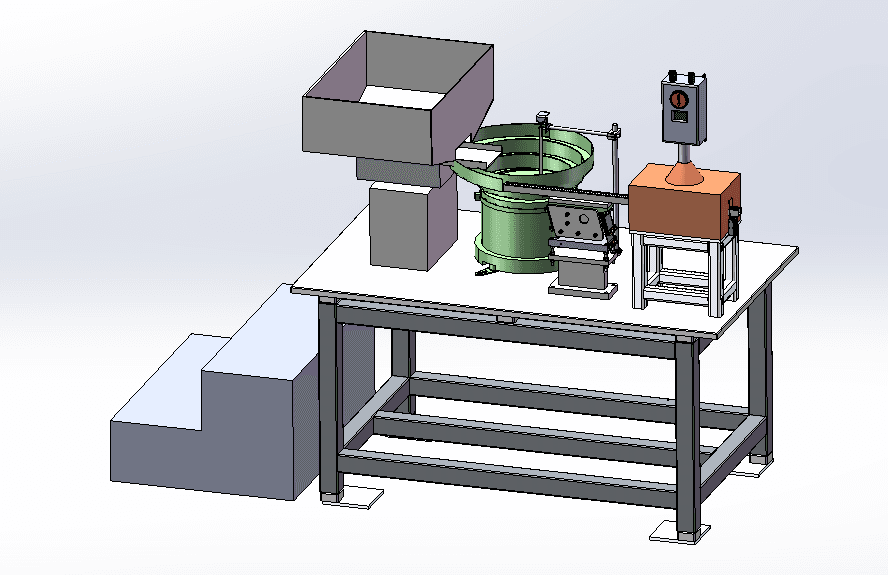
A complete vibratory feeder system is made up of several key parts working together:
What Industries Use Vibratory Bowl Feeders?
Vibratory bowl feeders are incredibly versatile and are the unsung heroes of countless manufacturing industries. They are essential for any automated production line that handles small parts.
Key industries include:
- Electronics & Semiconductors: For feeding tiny components like connectors, capacitors, and microchips.
- Automotive: Sorting and feeding nuts, bolts, clips, and a wide range of fasteners.
- Pharmaceutical & Medical: For handling pills, vials, syringes, and other small medical devices.
- Food & Beverage: Feeding caps, closures, and small packaging components.
- Hardware & Fasteners: The classic application—sorting and feeding screws, nuts, rivets, and nails.
- Toys & Consumer Goods: For assembling small plastic parts and components.
Beyond simple feeding, these devices can also be used for sorting, counting, and inspecting parts as they move through the system.
Common Problems and Troubleshooting
Like any industrial equipment, vibratory bowl feeders can sometimes experience issues. Here are the most common problems and what they usually indicate:
The Bowl Won’t Start (No Vibration)
- Possible Causes:
Slow or Irregular Feeding (Weak Vibration)
- Possible Causes:
- Broken spring leaves.
- The mounting surface is too thin and absorbing the vibration (needs to be at least 1.5 inches thick).
- The base is not level.
- The gap between the electromagnet and the armature is too large.
- Loose screws holding the base or track.
- Air supply pressure issues (if using air blow-offs) or dirty/moist air.
High Noise Levels
- Possible Causes:
The First Step in Troubleshooting: Always check the power, fuses, and the electromagnet gap. A systematic check of these three areas can solve a majority of common issues.
Choosing the Right Vibratory Bowl Feeder
There is no “one-size-fits-all” feeder. To get the right one, you need to define your specific needs. Here’s a checklist to help you get started:
- Part Characteristics:
- What is the part’s shape and size (length, width, height)? Is it symmetrical or irregular?
- What is the part’s weight? Heavier parts may require a more robust drive unit.
- What is the material (metal, plastic, delicate)? Is it prone to scratching? This will help choose the bowl material (e.g., stainless steel or a softer, coated version).
- Can you provide a physical sample? This is the most reliable way to test and verify the feeder’s performance before purchase.
- Production Requirements:
- Installation Conditions:
Frequently Asked Questions (FAQs)
Q: How long does it take to customize a non-standard vibratory bowl feeder?
Typically 15-30 days, depending on the complexity of the parts and the custom tooling required.
Q: What is the difference between a standard and a custom vibratory bowl feeder?
Standard feeders handle simple, regular parts like standard screws. Custom (non-standard) feeders are designed for irregularly shaped, fragile, or very precise components that require specific tooling and orientation mechanisms.
Q: How long is the equipment warranty period?
Warranties vary by manufacturer, but 1 year is common, often covering the drive unit (electromagnet, springs) and the controller.
Q: What information should I provide for an accurate quotation?
Just like the checklist above, you should provide: part name/dimensions/weight/material, desired feeding speed, and any special requirements (e.g., anti-static, low noise). A physical sample is ideal.
Conclusion
The vibratory bowl feeder is a fundamental piece of automation that transforms production efficiency. By understanding how it works, its key components, and the common issues that can arise, you can better evaluate your own needs and make an informed decision. Whether you are in electronics, automotive, or pharmaceuticals, this “hardworking assistant” is likely a key part of your factory’s success.
Contact Us
Click here: Contact Us
Email: David@zhmfr.com
Author:David Wu
URL: https://zhmfr.com
video URL:https://www.youtube.com/@David-OEM
China Kewei Intelligent Technology Co., Ltd
Address:No. 23, Yexing Road, Xiangxi Industrial Zone, Liaobu Town, Dongguan City, Guangdong Province, China
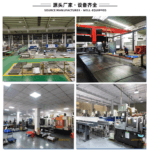
With our profound expertise in customized sheet metal manufacturing services, CNC milling and turning, and metal stamping processing, we meet the complex needs of the automation equipment industry, new energy storage industry, and manufacturing industry. Our service portfolio includes automation equipment enclosures, precision mechanical parts, energy storage cabinet enclosures, and other customized metal products. We use advanced laser cutting, welding, and forming technologies to produce parts with strict tolerances and excellent surface finish. Whether you need small batch prototypes for research and development or large-scale production for assembly lines, our scalable solutions ensure the quality, cost-effectiveness, and on-time delivery of your industrial projects.
相关文章:
 Complete Guide to Metal Residual Stress Relief: 6 Methods Compared
 The Complete Guide to Sheet Metal Fabrication: Processes, Materials, and Best Practices
 Mechanical metal parts are always delayed? 5 Proven Ways to Get Your Order On Time
 Sheet Metal Parts Quality Issues: Is It the Supplier’s Fault or Yours?