A balanced guide for overseas buyers — understanding who is responsible for common quality problems, and how to avoid them on both sides.
You open the package, and the parts do not look right. Your first reaction? “The factory messed up.”
But here is a hard truth that many overseas buyers do not want to hear: not every quality problem is the supplier’s fault. Sometimes the issue comes from your side — unclear drawings, unrealistic tolerances, or design features that are simply impossible to manufacture consistently.
This article takes a fair and balanced approach. We will look at common quality issues in sheet metal fabrication and honestly ask: Who is really responsible — the supplier, or the buyer?
The Big Picture: Why Most Disputes Happen
Before we dive into specific issues, let us understand why quality disputes happen in the first place.
The #1 reason: Poor communication about expectations.
In many cases, both parties are partially responsible:
- The buyer assumes the supplier knows what “good quality” means
- The supplier assumes the buyer understands the limitations of sheet metal fabrication
- Neither party asks enough questions
The result? Disappointment on both sides.
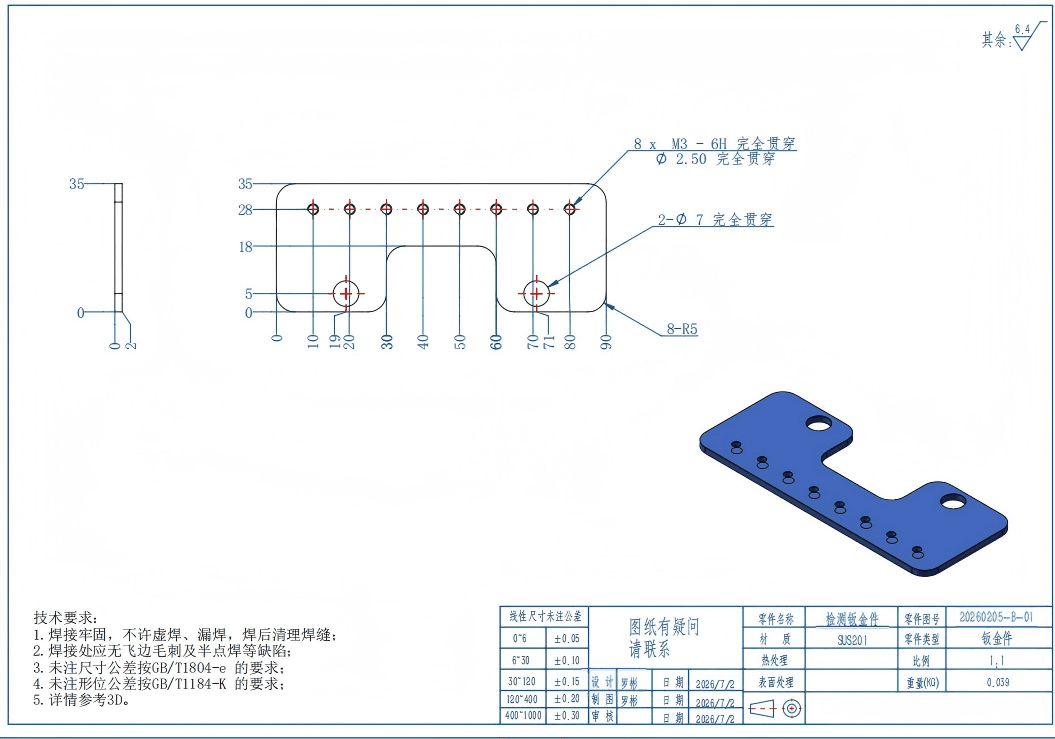
Common Issue #1: Dimensions Do Not Match the Drawing
The problem: Parts arrive and some dimensions are outside the tolerance specified on the drawing.
Who is usually at fault? Let us look at both possibilities.
It Could Be the Supplier’s Fault If:
- The supplier used the wrong material (e.g., thicker or thinner than specified)
- The supplier did not calibrate their machines properly
- The supplier skipped their quality control checks
- The supplier knowingly shipped out‑of‑tolerance parts just to meet the deadline
What the supplier should do: Have proper in‑process inspection, check dimensions on sample parts before mass production, and only ship parts that meet the drawing.
But It Could Be YOUR Fault If:
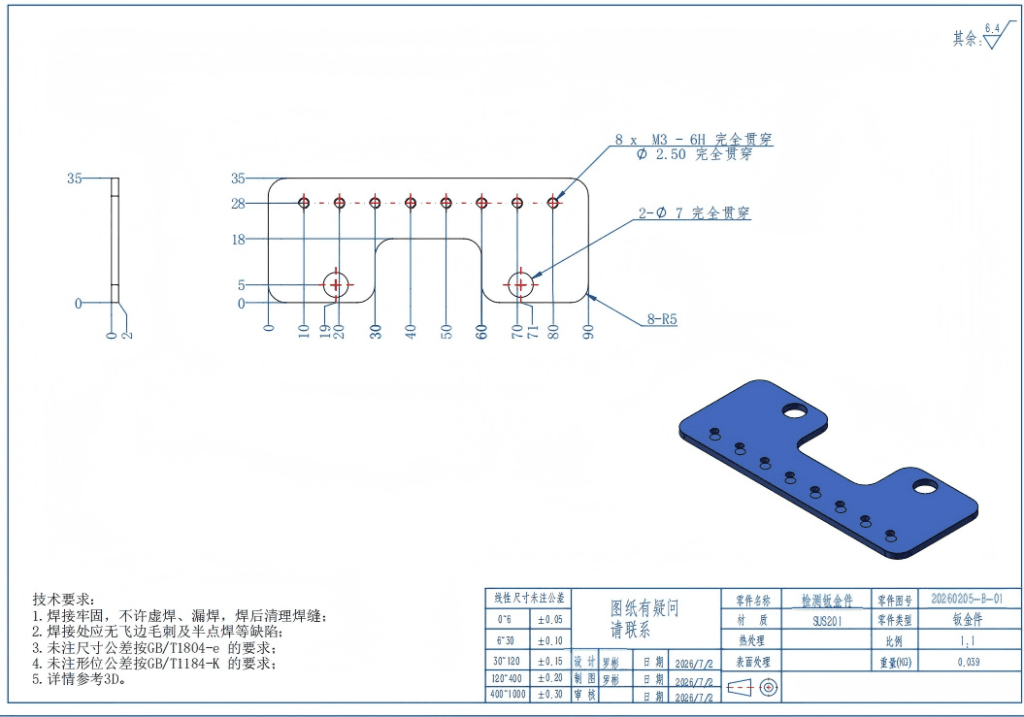
- The tolerance you specified is unreasonably tight for sheet metal. For example, ±0.1mm on a 500mm‑long part is nearly impossible to hold consistently — sheet metal bends and expands with temperature.
- You did not account for cumulative tolerance — four holes each with ±0.1mm tolerance can stack up to ±0.4mm, which may cause assembly problems.
- The drawing has unclear or missing datums — you measured from one edge, but the supplier measured from another edge.
- You did not provide a physical sample for reference, so the supplier only had the drawing to interpret.
What you should do: Always discuss tolerances with your supplier before production. Ask them: “What tolerance can you consistently hold for this feature?” Then adjust your drawing accordingly. And always send a physical sample or reference part for critical dimensions.
Bottom line: Many dimension problems are actually design problems — not manufacturing problems.
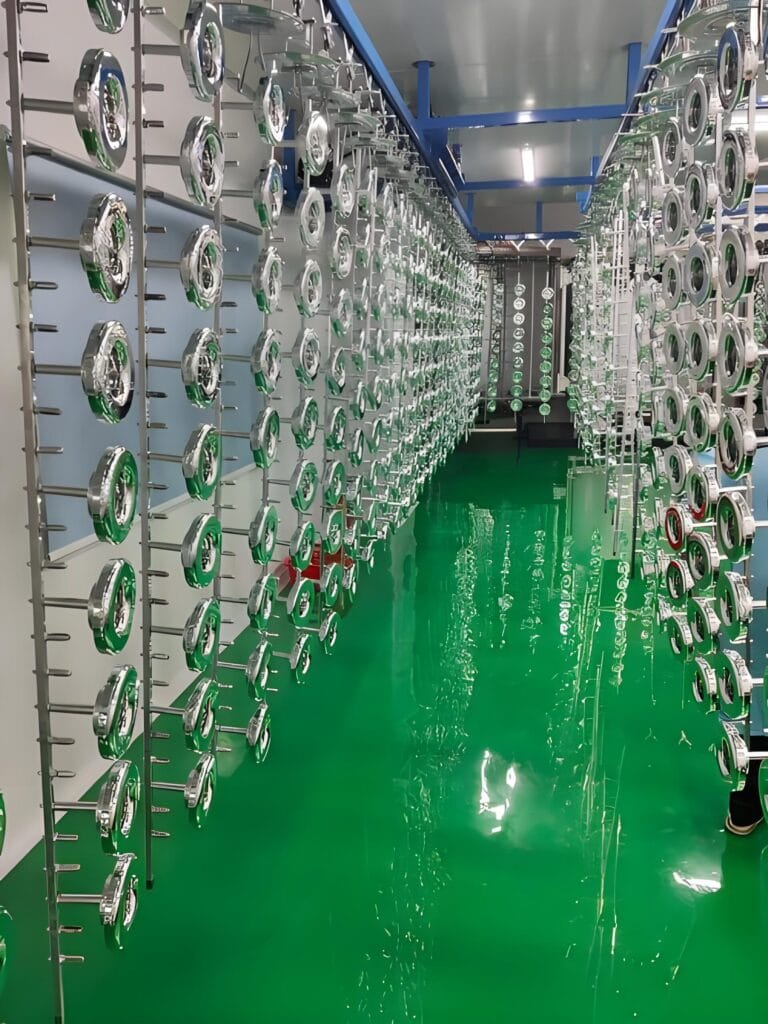
Common Issue #2: Surface Finish Does Not Look Right
The problem: The powder coating has orange peel, scratches, colour variation, or poor adhesion.
It Could Be the Supplier’s Fault If:
- The pre‑treatment (cleaning and phosphating) was skipped or rushed
- The curing oven temperature was incorrect
- The parts were handled roughly after coating, causing scratches
- The powder used was low quality or expired
What the supplier should do: Follow proper pre‑treatment steps, check oven temperature daily, handle coated parts with gloves, and do adhesion tests regularly.
But It Could Be YOUR Fault If:
- You specified a very low gloss level (e.g., 10‑20 gloss units) — these tend to show every handling mark and scratch more obviously.
- You chose a light colour like white or cream — these show surface imperfections much more than darker colours.
- You did not specify packaging requirements — parts rubbing against each other during shipping will inevitably scratch, especially on powder‑coated surfaces.
- You approved a sample that was handled with extra care, but did not ask for production process samples — the sample looked perfect because the supplier spent extra time on it, but that level of care is not sustainable for mass production.
What you should do: If appearance is critical, specify packaging clearly (foam dividers between parts, plastic wrapping, etc.). Consider choosing a slightly higher gloss level or darker colour to hide minor handling marks. And always ask to see production‑standard samples, not showroom‑quality one‑offs.
Bottom line: If you did not discuss packaging or allowed unrealistic finish expectations, some of the blame belongs on your side.
Click to learn more: Surface treatment of metals
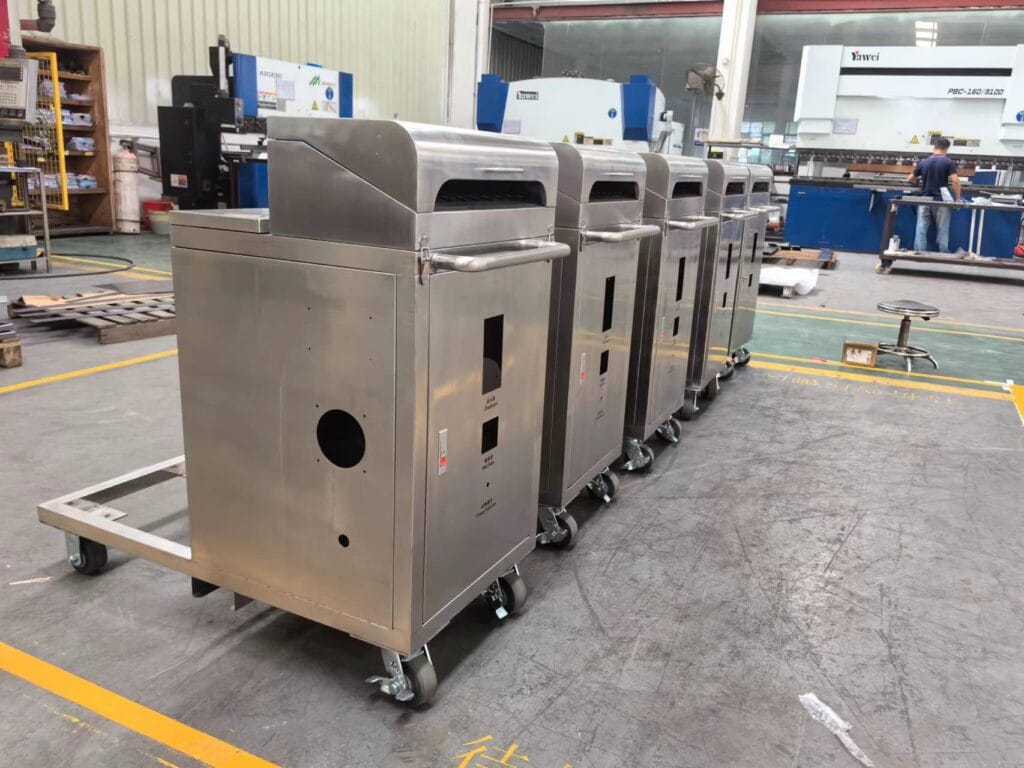
Common Issue #3: Parts Have Scratches or Dents
The problem: Parts arrive with visible scratches, dents, or dings.
It Could Be the Supplier’s Fault If:
- The parts were poorly packaged without protective material between them
- Workers dropped or dragged parts on the workshop floor
- The supplier loaded the cartons improperly, causing crushing
What the supplier should do: Use appropriate packaging materials, handle parts carefully during production, and inspect packaging before sealing cartons.
But It Could Be YOUR Fault If:
- You chose a very soft material like aluminium (5052, 6061) but did not specify extra packaging — soft metals scratch easily.
- You chose a “mill finish” (uncoated) surface — uncoated metal scratches much more easily and shows every mark.
- You wanted cheap packaging to save cost — the supplier used basic cartons as you requested, and now you are complaining about scratches.
- The damage happened during ocean freight — heavy container shifting or rough handling by port workers — which is beyond the supplier’s control.
What you should do: For soft materials or uncoated surfaces, request premium packaging (foam interleaving, plastic film wrapping, or wooden crates for heavy parts). And if you chose the shipping company and freight terms, shipping damage is between you and your freight forwarder — not the supplier.
Bottom line: Packaging is a shared responsibility. If you cut corners on packaging cost, you cannot expect pristine parts.
Common Issue #4: Parts Do Not Fit in Assembly
The problem: When you try to assemble the parts, holes do not line up, or edges do not meet properly.
It Could Be the Supplier’s Fault If:
- The supplier misread the drawing and bent the part at the wrong angle
- The supplier used the wrong material thickness, affecting overall dimensions
- The supplier’s welding fixture was poorly made, causing warping Click to learn more: Comprehensive Guide to Sheet Metal Welding
What the supplier should do: Check bend angles carefully, use proper welding fixtures, and do assembly tests at the factory before shipping.
But It Could Be YOUR Fault If:
- Your drawing has missing or inconsistent tolerances — for example, you specified hole positions but did not specify tolerance, so the supplier used their standard (±0.5mm) but your assembly requires ±0.2mm.
- You designed holes and slots without considering material thickness — a 2mm thick part with a 5mm hole near the edge may stretch and distort during bending.
- You designed features that are impossible to measure consistently — for example, measuring from a curved surface or a non‑existent edge.
- You made design changes after the sample was approved but did not request a new sample — so the supplier made the changes based on a drawing update, but the assembly behaviour changed unexpectedly.
What you should do: Always specify critical dimensions clearly with tolerances. For complex assemblies, request the supplier to do a full assembly trial (using a few parts from the first batch) before shipping the entire order. And if you change the design, always ask for a new sample.
Bottom line: Assembly problems often trace back to incomplete or unclear design — not necessarily poor manufacturing.
Click to learn more: how to find a reliable sheet metal supplier
Part 2: How to Handle Problems Professionally
When you find quality issues, here is a fair way to handle them:
Step 1: Ask “Who’s Responsible?” Honestly
Before you send an angry email to your supplier, take a moment to be honest with yourself:
- Did I specify this clearly in the drawing?
- Did I approve a sample that had this same characteristic?
- Did I choose the packaging or shipping method?
- Is this tolerance realistic for this material and process?
If the answer to any of these is “maybe”, you need to approach the conversation with an open mind — not with blame.
Step 2: Categorise the Issue Fairly
| Type | What It Means | Who Pays |
|---|---|---|
| Supplier error | Wrong material, wrong dimensions (clearly outside your specified tolerance), missed features | Supplier replaces or refunds |
| Design/communication issue | Unclear drawing, unrealistic tolerance, missing spec | Both parties share — you take some responsibility, supplier offers partial compensation |
| Shipping damage | Damage during transport | Freight forwarder or your insurance — not the supplier |
| Acceptable variation | Within tolerance but slightly different from the sample | Accept as‑is — no compensation needed |
Step 3: Communicate Professionally
Here is an example of how NOT to write an email:
“These parts are terrible! You sent us junk! Fix this immediately!”
Here is a better way:
“We have received the parts and found some dimension issues on the mounting holes. We measured them at X+0.4mm, while our drawing specifies X±0.2mm. Could you please check your production records and let us know what happened? These parts may still be usable with some adjustment at our side — we would like to discuss a fair solution.”
The difference: The second approach is factual, measured, and does not burn bridges.
Part 3: Practical Tips for Both Sides
For Suppliers (What You Can Do):
- Ask for physical samples before mass production — never rely only on drawings
- Flag unrealistic tolerances before quoting — do not say “yes” to everything
- Send packaging photos before shipping so the buyer can approve
- Keep photos and records of every step — this protects you in disputes
For Buyers (What You Can Do):
- Accept that sheet metal is not precision machining — ±0.5mm is normal for many features
- Always discuss tolerances with your supplier — do not assume they know what you need
- Request a small trial order (50‑100 pieces) before large production — this catches issues early with minimal risk
- Ask for pre‑shipment photos or videos — it is cheaper than a third‑party inspection
Summary: A Fair Way to Look at Quality
| Situation | Likely Responsibility |
|---|---|
| Dimensions clearly out of spec | Supplier |
| Tolerance too tight for sheet metal | Buyer (design issue) |
| Scratches from rough handling | Shipping or poor packaging (shared) |
| Wrong colour powder used | Supplier |
| Colour looks different in your office lighting | Neither — lighting condition issue |
| Welding warping | Supplier (poor fixture) — or design (too many welds close together) |
| Holes do not align | Often a cumulative tolerance issue — partial blame on both |
| Part arrived bent in a crushed carton | Shipping / freight forwarder |
Final Word: A Good Partnership Is a Two‑Way Street
The best supplier‑buyer relationships are built on honesty, clear communication, and shared responsibility.
- A good supplier will admit when they made a mistake and will fix it fairly.
- A good buyer will understand that sheet metal has limits and will not demand perfection that is impossible to achieve.
When both sides take responsibility for their part of the process, problems become opportunities to improve — not reasons to fight.
A critical step before mass production: always rely on sample verification to set the final delivery standards for sheet metal parts. This process not only confirms dimensional tolerances and color matching, but also helps us catch potential issues with packaging and shipping damage before they happen. At the same time, we should actively turn any improvement points found during trial assembly into actionable changes before full production starts. By addressing all problems at the sample stage, we can protect both quality and cost from the very beginning.
Contact Us
Click here: Contact Us
Email: [email protected]
Author:David Wu
video URL:https://www.youtube.com/@David-OEM
China Kewei Intelligent Technology Co., Ltd
Address:No. 23, Yexing Road, Xiangxi Industrial Zone, Liaobu Town, Dongguan City, Guangdong Province, China
With our profound expertise in customized sheet metal manufacturing services, CNC milling and turning, and metal stamping processing, we meet the complex needs of the automation equipment industry, new energy storage industry, and manufacturing industry. Our service portfolio includes automation equipment enclosures, precision mechanical parts, energy storage cabinet enclosures, and other customized metal products. We use advanced laser cutting, welding, and forming technologies to produce parts with strict tolerances and excellent surface finish. Whether you need small batch prototypes for research and development or large-scale production for assembly lines, our scalable solutions ensure the quality, cost-effectiveness, and on-time delivery of your industrial projects
相关文章:
 Custom Cut Sheet Metal: A Complete Guide for Buyers and Engineers
The Complete Guide to Sheet Metal Fabrication: Processes, Materials, and Best Practices
Custom Cut Sheet Metal: A Complete Guide for Buyers and Engineers
The Complete Guide to Sheet Metal Fabrication: Processes, Materials, and Best Practices
 Custom Metal Enclosures in China: Your Complete Guide to OEM Sheet Metal Housings
 Custom Sheet Metal Solutions: What Kewei Can Do for Your Business