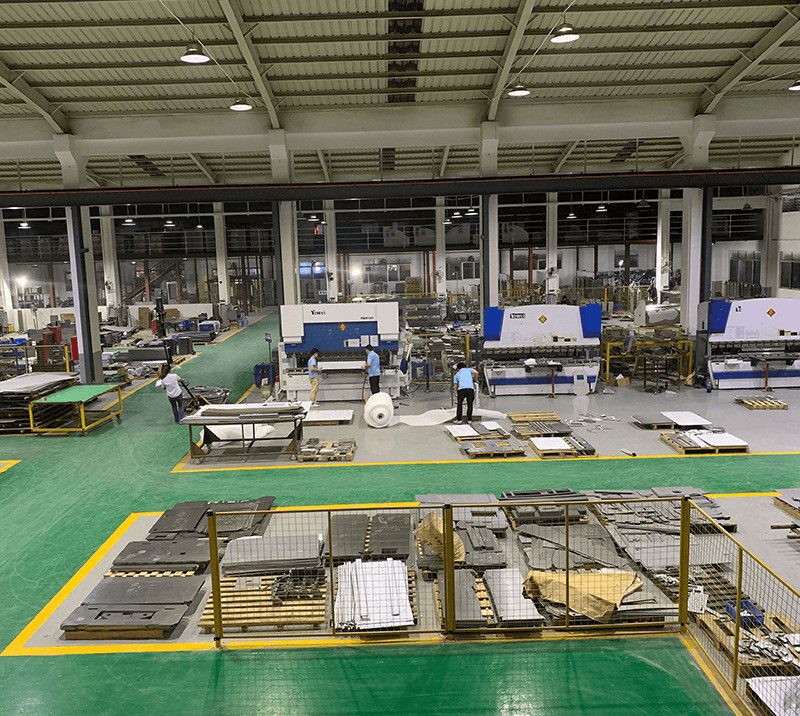
A practical guide for international procurement professionals who want to avoid common pitfalls when buying custom metal fabricated parts from Chinese suppliers.
If you’re reading this, chances are you’re an overseas buyer, procurement manager, or engineer who is considering — or already in the middle of — sourcing sheet metal parts from China. You’ve probably received a few quotes, maybe even visited a factory or two. But you’ve also likely encountered some confusion:
- Why do prices vary so much between different suppliers?
- Why does the sample look perfect but the mass production order comes with issues?
- Why is the shipping date delayed even though the factory promised “on time”?
This article is written specifically for you — the international buyer. We won’t use complicated technical jargon. Instead, we’ll walk you through 5 practical, easy-to-understand tips that will help you find a reliable sheet metal fabrication partner in China, avoid costly mistakes, and build a long-term sourcing relationship with confidence.Please click here:Contact Us
1. Understanding the Quote: Why “Cheap” Is Usually Not Cheap
The first thing many overseas buyers notice is the price difference. One supplier quotes you $5.00 per part, another quotes $3.50, and a third one says they can do it for $2.80. Naturally, you’re tempted to go with the cheapest option.
But here’s what the “cheap” quote often hides:
| What You See | What It May Actually Mean |
|---|---|
| Low material cost | Using lower-grade steel or thinner material than specified |
| No line-item breakdown | Hiding extra charges for tooling, packaging, or surface treatment |
| “Free samples” | Sample quality is high, but mass production uses different processes |
| No MOQ mentioned | They may force a much higher quantity after you commit |
What a reliable supplier’s quote should look like:
- Clearly separated costs: material, laser cutting, bending, welding, surface treatment, packaging, and shipping
- Material brand/source specified: e.g., “Baosteel cold-rolled steel SPCC” — not just “steel”
- Tooling cost (if any): one-time mold/tooling fee clearly stated
- MOQ clearly defined: minimum order quantity with tiered pricing for different volumes
- Lead time with buffer: e.g., “15 working days (including 2–3 days buffer for quality inspection)”
One practical tip: Ask for a cost breakdown — not because you want to squeeze every penny, but because it shows whether the supplier truly understands your part and has a transparent business practice. A supplier who can explain why each cost exists is usually more trustworthy than one who just gives a final number.
2. The Sample Trap: What “Sample Quality” Really Tells You (and What It Doesn’t)
Many buyers believe that if a supplier sends a perfect sample, the mass production will be equally perfect. This is one of the most common misconceptions in overseas sourcing.
Here’s the truth:
A sample is usually made with extra care — sometimes even by the most experienced technician in the workshop. It is not necessarily representative of what you’ll get in a 1,000-piece production run.
So what should you look for instead?
Ask for these three things before approving the sample:
- “Can you show me your production inspection records for the last batch of a similar part?”
This tells you more about their consistent quality than any single sample ever could. - “What is your process for ensuring the sample quality is repeated in mass production?”
The right answer involves “first article inspection (FAI)” and “in-process random checks” — not just “we will make it the same.” - “Can I keep the sample as a ‘golden sample’ for future comparison?”
A reliable supplier will welcome this. An unreliable one may hesitate because they know mass production won’t match it.
Most importantly: Do not approve mass production based on a single perfect sample. Instead, request a small batch trial (e.g., 20–50 pieces) before committing to a large order. This small investment will save you from big headaches later.
3. Communication: The #1 Predictor of a Successful Partnership
When you’re sourcing from overseas, communication quality is just as important as product quality — maybe even more so.
Here are three red flags to watch for during the quoting and sampling phase:
Red Flag #1: “Yes” to Everything
If your supplier says “yes” to every question you ask — even when you suggest something that sounds technically impossible — be careful. A good supplier will push back and say: “That might be difficult because… here’s what we recommend instead.” Blind agreement often means they either don’t fully understand your requirements or they will figure things out later (and you may not like the result).
Red Flag #2: Vague Responses About Tolerances
When you ask about tolerance (precision), a good supplier will say something specific like: “For laser cutting, our stable tolerance is ±0.15mm. For bending, ±0.3mm.” A less reliable supplier will say: “Very precise, don’t worry.”
Remember: In sheet metal fabrication, unclear tolerance = trouble. If they can’t specify it upfront, they won’t be able to control it during production.
Red Flag #3: No Questions About Your Application
A supplier who really understands sheet metal will ask you:
- “What is this part used for? How will it be assembled?”
- “Does it need to bear weight or pressure?”
- “Will it be exposed to outdoor weather?”
These questions show they care about function, not just making a shape. A supplier who never asks “why” is likely to miss important details that affect your product’s performance.
Practical suggestion: During your first few communications, pay more attention to how they respond than what they respond. Clarity, honesty, and curiosity are better predictors of a good partnership than fast replies or low prices.
4. Quality Control: What Should Be in Your Supplier’s QC Process
Many overseas buyers assume that Chinese factories have built-in quality control. The reality is: some do, some don’t — and you need to know which is which.
Here is a simple checklist of QC steps that a reliable sheet metal supplier should have:
| QC Stage | What It Means | Why It Matters |
|---|---|---|
| Incoming Material Inspection | Checking raw material thickness, surface quality, and material certificate before cutting | Prevents using wrong or substandard material from the start |
| First Article Inspection (FAI) | Making 1–3 pieces first, measuring all critical dimensions, and getting your approval before full production | Catches errors early — when fixing is still cheap |
| In-Process Inspection | Regular spot checks during production (e.g., every 30–50 pieces) | Catches tool wear or material variations before they ruin the whole batch |
| Final Quality Check | 100% inspection of appearance and key dimensions before packaging | Prevents bad parts from being shipped to you |
| Retention Sample | Keeping 1–2 pieces from each batch for future reference | Helps resolve disputes about “what was approved” vs “what was delivered” |
One simple question to ask: “Can you share your QC checklist for our part?” A legitimate supplier will have a standard template and will be happy to share it. If they don’t have a QC checklist at all, that’s a clear warning sign.
5. Shipping, Packaging, and After-Sales: What Happens After Production
Even if the parts are manufactured perfectly, problems can still occur during shipping — and that’s where many overseas buyers get frustrated.
Packaging Matters More Than You Think
Sheet metal parts are heavy and have sharp edges. Without proper packaging:
- Parts can scratch each other during transit
- Welded joints can get bent or broken
- Surface treatment (powder coating, plating) can be damaged
What to ask about packaging:
- “How do you separate parts to prevent scratches?” (good answer: foam padding, plastic film, or cardboard dividers)
- “Are heavy parts placed at the bottom of the carton?” (logical but surprisingly often ignored)
- “Can you send me a photo of the packaged parts before shipping?” (a good supplier will do this as standard practice)
What About Quality Issues After Delivery?
This is perhaps the most important trust-building question of all. Even with the best quality control, a small percentage of parts may have issues due to handling, transportation, or unforeseen factors.
A reliable supplier will have a clear after-sales policy, such as:
- 24–48 hour response to quality complaints
- Replacement parts shipped free of charge for any confirmed quality defects
- A clear process for dispute resolution (based on the signed drawing)
Watch out for suppliers who say: “Once the parts leave our factory, we are not responsible.” In international business, good suppliers stand behind their products — even after delivery.
Bonus: A Quick “Supplier Scorecard” for Your Reference
Use this simple scorecard when evaluating a potential sheet metal supplier. Score each item from 1 to 5:
| Evaluation Item | 1 Point | 3 Points | 5 Points |
|---|---|---|---|
| Quote Transparency | Just a total price | Basic breakdown | Full breakdown with material source |
| Sample Process | Sends sample without inspection | Provides basic FAI | FAI with customer approval required |
| Communication | Slow or vague responses | Clear but passive | Proactive suggestions and questions |
| QC System | No clear QC process | Has basic QC steps | Documented QC with checklists |
| After-Sales Policy | “Not our problem after shipping” | Will discuss case by case | Clear policy with response timeline |
Score Interpretation:
- Above 20: Strong candidate — proceed with confidence
- 15–20: Worth a small trial order first
- Below 15: Consider other options
Final Thoughts: Building a Long-Term Partnership
Sourcing sheet metal parts from China is not just about finding the lowest price. It’s about finding a manufacturing partner who understands your requirements, communicates honestly, and stands behind their work.
The best relationships are built on transparency, mutual respect, and clear expectations. When you find a supplier who:
- Answers your questions directly (even when the answer is “we need more time”)
- Points out potential problems in your design before making the parts
- Delivers consistently — not just once, but batch after batch
…then you’ve found a real partner. And that partnership will save you far more money, time, and stress than any cheap quote ever could.
Contact Us
Click here: Contact Us
Email: [email protected]
Author:David Wu
video:https://www.youtube.com/@David-OEM
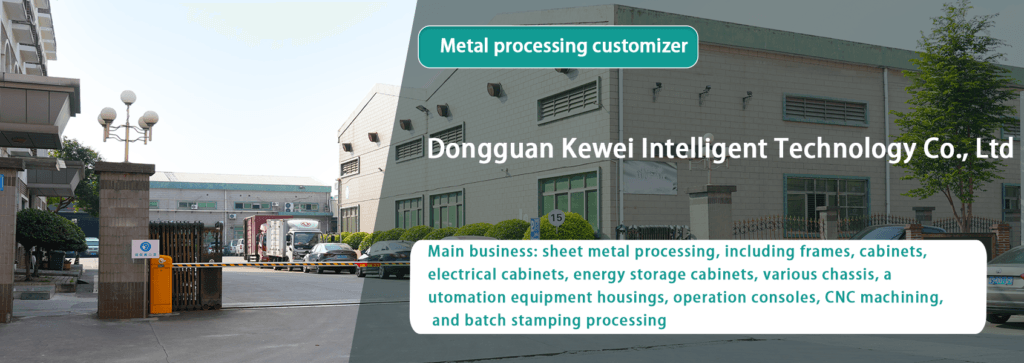
China Kewei Intelligent Technology Co., Ltd
Address:No. 23, Yexing Road, Xiangxi Industrial Zone, Liaobu Town, Dongguan City, Guangdong Province, China
With our profound expertise in customized sheet metal manufacturing services, CNC milling and turning, and metal stamping processing, we meet the complex needs of the automation equipment industry, new energy storage industry, and manufacturing industry. Our service portfolio includes automation equipment enclosures, precision mechanical parts, energy storage cabinet enclosures, and other customized metal products. We use advanced laser cutting, welding, and forming technologies to produce parts with strict tolerances and excellent surface finish. Whether you need small batch prototypes for research and development or large-scale production for assembly lines, our scalable solutions ensure the quality, cost-effectiveness, and on-time delivery of your industrial projects
相关文章:
 The Complete Guide to Sheet Metal Fabrication: Processes, Materials, and Best Practices
Custom Cut Sheet Metal: A Complete Guide for Buyers and Engineers
The Complete Guide to Sheet Metal Fabrication: Processes, Materials, and Best Practices
Custom Cut Sheet Metal: A Complete Guide for Buyers and Engineers
 Sheet Metal Parts Quality Issues: Is It the Supplier’s Fault or Yours?
 Custom Metal Enclosures in China: Your Complete Guide to OEM Sheet Metal Housings