Key Advantages of Cold Stamping: Why It’s the Top Choice for High‑Volume Metal Parts
When it comes to manufacturing metal components, choosing the right process directly affects part quality, lead time, and overall cost. Cold stamping – a forming process performed at room temperature – offers clear technical and economic benefits over methods like sheet metal bending and CNC machining.
Below, we break down the 7 core strengths of cold stamping, covering productivity, precision, and cost structure, to help you decide if it is the right fit for your next project.
1. High Speed & Low Waste – Maximum Efficiency
Cold stamping uses a press and dies to complete cutting, punching, and drawing in a single stroke. Production rates are extremely fast – often tens to hundreds of parts per minute. With intelligent strip layout (nesting), material utilisation can reach over 85%. This combination of high output and low scrap makes it one of the most economical choices for large‑scale manufacturing.
2. Ability to Form Complex Shapes – Ideal for Thin‑Walled & Intricate Parts
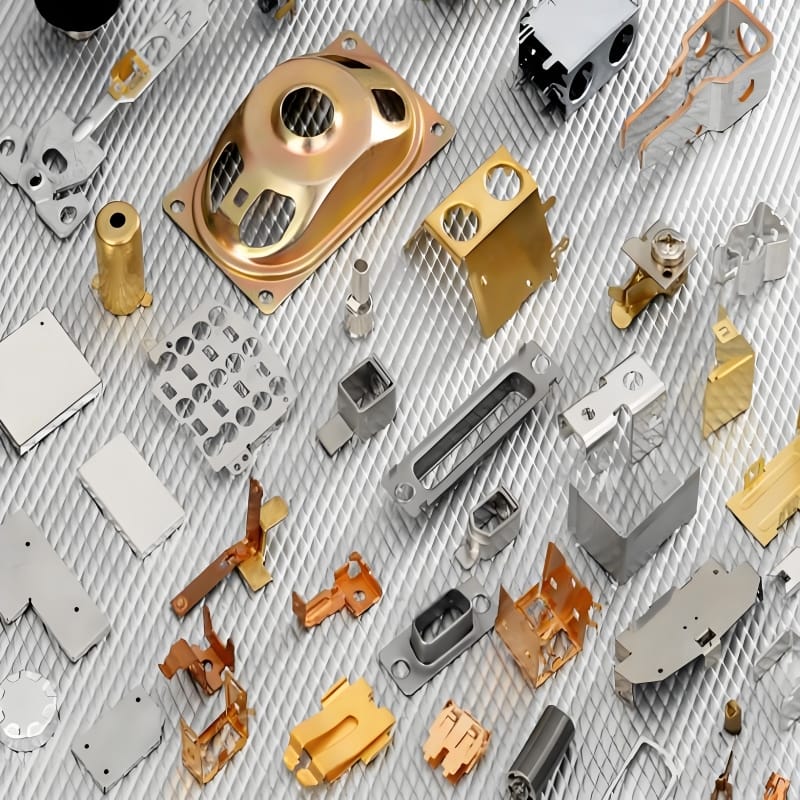
For components with complex geometries, thin walls, deep draws, or integral reinforcing ribs, cold stamping is often the only viable solution. It transforms flat sheet metal into shapes that would be impossible – or prohibitively expensive – to achieve through welding, casting, or pure cutting. It excels at producing parts that are both rigid and lightweight without additional joining operations.
3. Excellent Dimensional Accuracy – Minimal Secondary Machining
With precise die guidance and rigid tooling, cold‑stamped parts typically achieve IT8 to IT11 tolerance grades. Most parts meet assembly requirements straight off the press, eliminating the need for secondary machining. For even tighter demands (e.g., precision electronics or instruments), advanced techniques like fine blanking or micro‑clearance dies can further improve accuracy.
4. Superior Consistency & Interchangeability – Hassle‑Free Assembly
Because the stamping process is highly repeatable, dimensional variation across the same batch is extremely small. This outstanding interchangeability means that any part taken from the batch will fit perfectly during final assembly – no rework, no selective fitting, and significantly lower quality risk on the production line.
5. Good Native Surface Finish – Ready for Post‑Processing
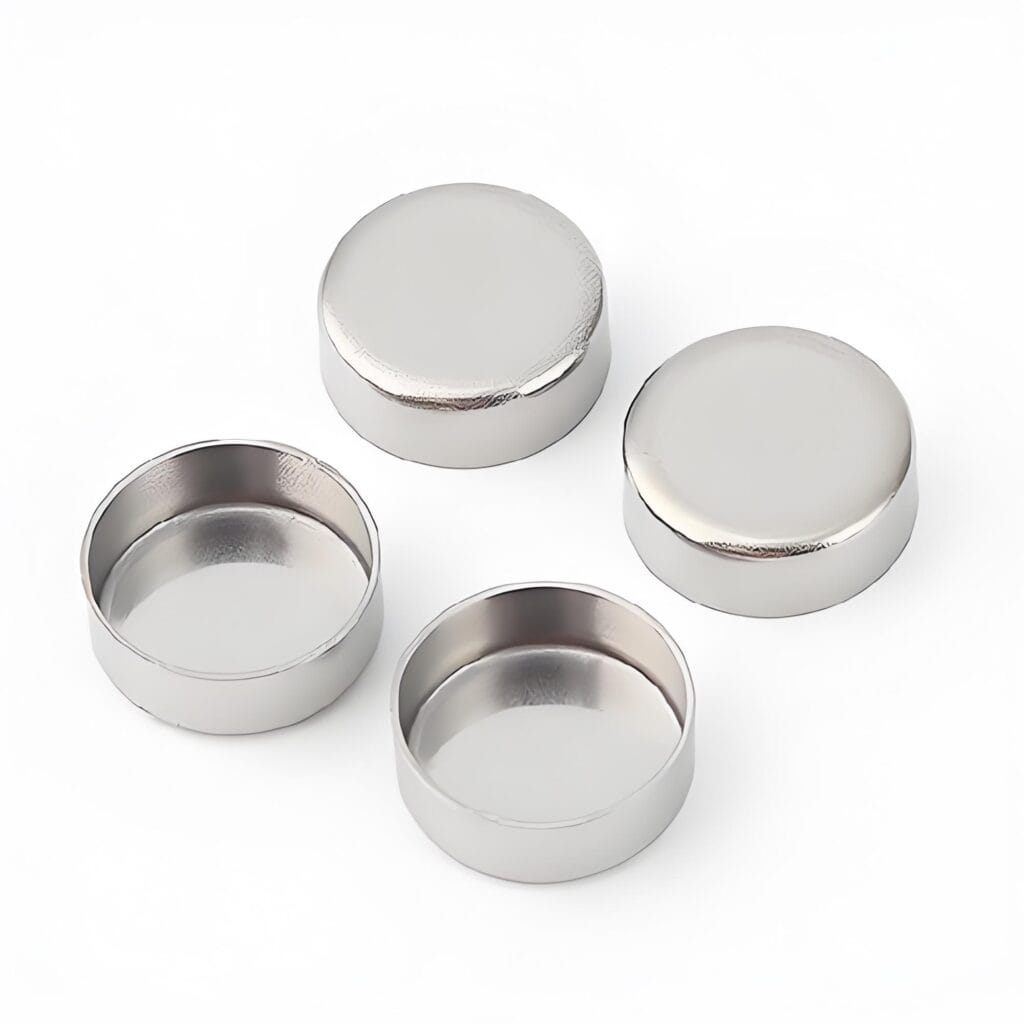
Cold stamping preserves the original dense surface layer of the sheet metal, and the polished die faces produce parts with a smooth surface finish. This provides an excellent base for subsequent treatments like electroplating, painting, or anodising, while greatly reducing the need for preparatory work such as grinding or polishing.
6. High Strength with Light Weight – A Structural Advantage
During cold forming, the material undergoes work hardening (strain hardening), which can increase tensile strength and stiffness by 20–40% compared to the raw sheet. Combined with well‑designed ribs and stiffeners, this allows engineers to reduce wall thickness without sacrificing performance – a critical benefit for lightweighting in automotive, aerospace, and portable device applications.
7. One‑Time Tooling Investment – Very Low Unit Cost at High Volumes
This is where cold stamping fundamentally outshines CNC machining and sheet metal bending. Although the upfront cost for die design and fabrication can be significant, that cost is spread over every part produced. At high annual volumes (typically tens of thousands of parts or more), the per‑piece cost drops dramatically – far below the cost of CNC machining (which charges per cycle) or incremental bending. Additionally, stamping operations are simple to automate and do not require highly skilled operators, further optimising labour costs.

Final Thoughts: Choose Stamping for the Right Scale
If you are facing high‑volume production of medium‑to‑small metal parts and prioritise cost‑effectiveness, stable quality, and fast delivery, cold stamping is a proven, reliable choice. We strongly recommend involving your tooling supplier early in the project for a DFM (Design for Manufacturability) review – this small step can unlock even greater savings.
Contact Us
Click here: Contact Us
Email: David@zhmfr.com
Author:David Wu
video URL:https://www.youtube.com/@David-OEM
China Kewei Intelligent Technology Co., Ltd
Address:No. 23, Yexing Road, Xiangxi Industrial Zone, Liaobu Town, Dongguan City, Guangdong Province, China
With our profound expertise in customized sheet metal manufacturing services, CNC milling and turning, and metal stamping processing, we meet the complex needs of the automation equipment industry, new energy storage industry, and manufacturing industry. Our service portfolio includes automation equipment enclosures, precision mechanical parts, energy storage cabinet enclosures, and other customized metal products. We use advanced laser cutting, welding, and forming technologies to produce parts with strict tolerances and excellent surface finish. Whether you need small batch prototypes for research and development or large-scale production for assembly lines, our scalable solutions ensure the quality, cost-effectiveness, and on-time delivery of your industrial projects
Pingback: Custom Metal Stamping Service in China - Kewei Intelligent Technology Co., Ltd